

By Brooke Benaske
Standing in the glass-blowing factory in Murano, Italy, I could feel the heat radiating through my gloves as the nearby furnaces made the room almost unbearable. The chaos of tourists passing through, artisans at work, and following instructions was overwhelming, yet I felt at peace. I rotated the glowing molten glass, rolled it in colorful tiles, and watched as the pieces came together to form a beautiful vase of my own.
Putting on my safety glasses immediately transformed me into the role of an artisan. I was transported back in time, learning the historical techniques of the original Murano glass artisans. I traveled back 1,500 years to when the story of Murano glass began after glassmakers traveled to the Venetian region from Aquileia, Italy to escape barbarian attacks during the Roman Empire (“Barbarians”). By the 8th century, Venice led the world in glass manufacturing, according to Native Trails Home. They were even the first producers of mirrors in Europe (“History”). The glassmakers formed a guild to regulate the industry. In 1291, legislation required them to relocate from Venice to Murano due to frequent fires and city-wide fear. In 1295 legislation was passed that prevented glassmakers from leaving Murano (“History”). Despite a long, complicated history, Murano glass remains popular worldwide, attracting tourists, like my family and I, who want to witness this ancient craft firsthand.
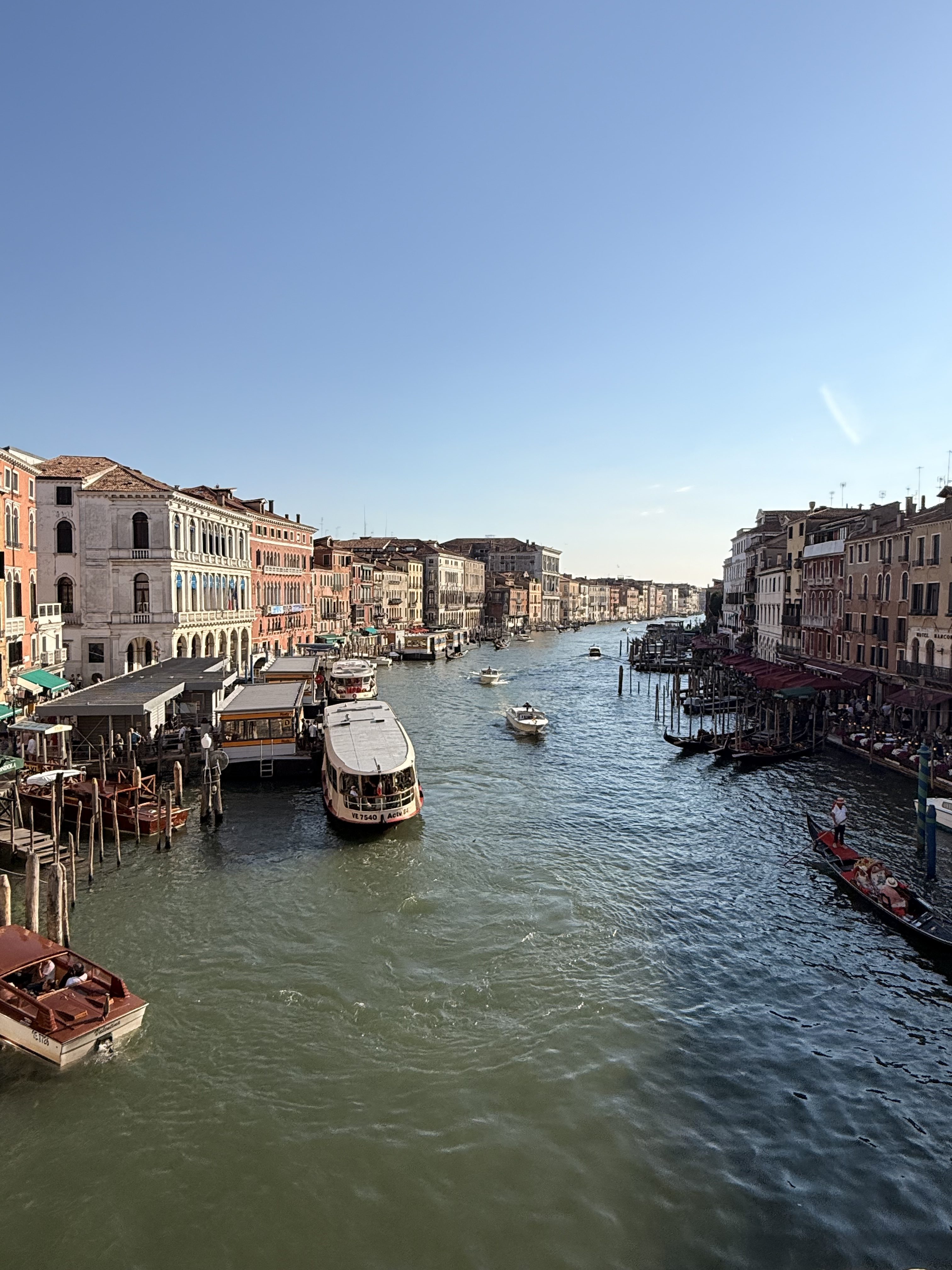
We booked this glass-blowing experience (at Wave Murano Glass) to immerse ourselves into the Venetian culture. Like myself, many tourists come from across the world ready to witness the Murano glass factories and see the beautiful products these artisans have created. From delicate animal figurines to intricate pieces of beaded jewelry, the variety of products reflects the creativity of products and patience behind each creation. Watching the artisans work made me appreciate how much time, precision, and skills go into creating something that might otherwise seem like a simple decorative object.
The most fascinating part of the glassblowing process was watching the glass change color in the intense heat of the furnace. The vibrant colors seemed to disappear, leaving us wondering whether our finished pieces would ever return to their original shades.
After our vacation, I eagerly awaited the package that would bring my vase back to Michigan. I could hardly wait to see whether the glass had returned to the deep blue I chose. When it finally arrived in early June, I was thrilled that it returned to its original shade and decided to display it on a shelf in my room. It rests in my room as a mosaic of memories, with every swirl of blue and fleck of color representing a different piece of my story coming together to create something uniquely beautiful.


Leave a Reply