

“Why won’t you tell me about your past?”
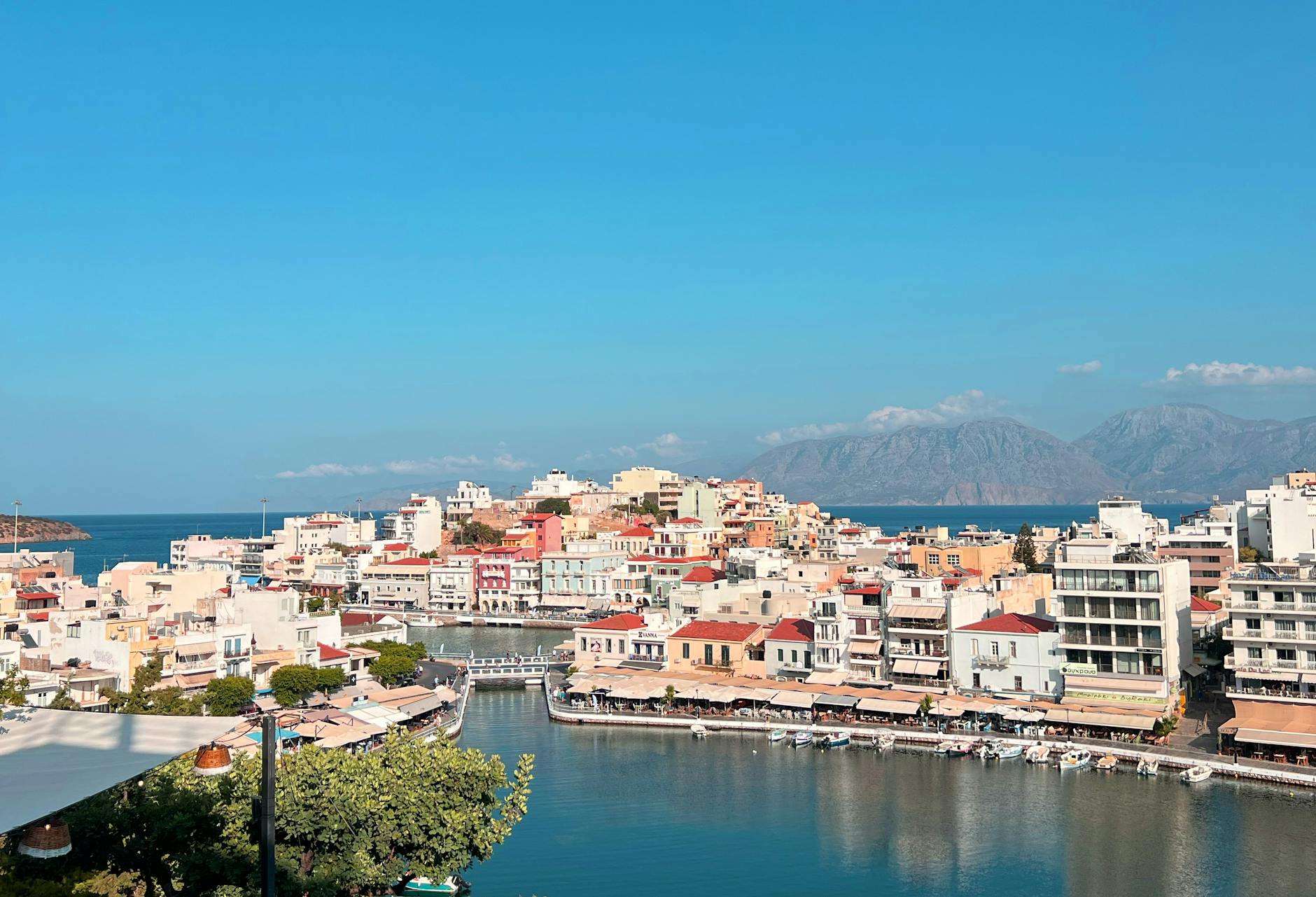
That’s all it took to begin unraveling generations of history in The Island by Victoria Hislop (2005). At the heart of the Petrakis family’s secretive past is the Island of Spinalonga, off the coast of Plaka, Crete, which was once home to Greece’s leper colony. Made up of people suffering from leprosy, which damages sufferers’ skin and nerves, the island holds special meaning for the family. This unique part of history, mixed with secrets, romance, and a beautiful setting, made this book absolutely worth reading.
Alexis, the protagonist in The Island, is relentlessly curious to learn about her mother’s past. After years of questioning, her mom, Sofia, eventually caves in and sends her to the small town of Plaka with a letter for her childhood best friend. Upon arriving to visit Spinalonga, Alexis is immediately intrigued as she steps through the walled fortress, retracing the footsteps of hundreds of lepers from decades before who were condemned from the outside world with no hope of return. Through grief, love, separation, loyalty, death, and eventual cures, this book was a whirlwind of emotions related to Alexis’ family and the island of Spinalonga, weaving between the modern day and the World War 2 era.

With the main story set on the one-of-a-kind island of Spinalonga, the setting is more than just a place; it also represents the lives and identities of many characters through the leper colony. Plaka is another featured location, as it’s the hometown of the Petrakis family and the window into the life of Spinalonga, and Hislop does a great job contrasting these two places. Because Spinalonga and Plaka are both vital to the character’s traditions, livelihoods, and families, the places are directly influential to the plot and character development.
This book will make you want to travel to Crete. If you do, I’ve put together a guide to real-life places and activities across Crete, where you can count on seeing “mile upon mile of olive groves and, in places where the ground became flatter on the coastal plains, huge plantations of reddening tomatoes and ripening grapes” (p.20). Alexis traveled this same path throughout the island, and this guide will allow you to experience her family history for yourself, beginning with life on Spinalonga.
History is central to this book since it takes place so long ago, and there’s no better place to begin your exploration than the island of Spinalonga. When approaching the island on a quick 10-20 minute boat from Plaka, Spinalonga’s harbor (a UNESCO World Heritage site) is still surrounded by the massive walls Alexis passed through and “a small entrance that was just about head height. It was a tiny, dark opening in the pale expanse of stonework” (p.25). These fortress walls, seen from the harbor, have played an important role in protecting the island since the 14th-century Venetians built them for military purposes, but today they’re mostly a quick stop as an introduction to the island.
Once you pass through the walls, visit the Ottoman Period Market, where, at the time of the book, it was “a smart row of shops with shutters and doors freshly painted in deep blues and green” (p.112). The fresh paint and variety of shops, selling anything from bread to lace goods, were major quality-of-life improvements for those living on the island, and many of the shops have been restored as museums or mockups. This historic market is often called a highlight of the island, so it’s not somewhere to miss!
The next stop on Spinalonga should be the hospital, “a building far grander than any other on the island” (p.134). The original building was an Ottoman mosque, so the hospital has a unique structure built high on the hillside, making it worth the visit. This was a frequent stop for many of the island’s residents due to health issues associated with leprosy, and it was expanded in the 1930’s to provide more space and healthcare opportunities. You can still walk through the hospital, but because of its age, it’s more like ruins than an actual hospital.
Finally, you must visit the Spinalonga Church of Saint Panteleimon. The church is much older than the leper colony of the novel, dating back to 1709. In the book, this place serves as a vital source of social and spiritual wellness for the residents and is frequently a gathering place for important cultural holidays, such as Easter. They’d decorate with “sprigs of rosemary, laurel leaves and myrtle branches,” ensuring that holidays could be celebrated properly despite the island’s isolation (p.125). Now, it acts as a museum and place of remembrance for those who lived and died on the island, but it does not hold regular services.

On mainland Crete, there is tons to do! If you’re in Plaka, a must-visit is Plaka Beach, where there’s “no shortage of smooth, flat pebbles” to skip along the Mediterranean Sea (p.164). In the book, Sofia frequented the beach with her friends, especially during World War 2, to escape the watchful eyes of German soldiers. This beach, which faces crystal clear water, is also a great snorkeling spot! It is known to many visitors as quiet and uncrowded, with great views of Spinalonga, too.
Just down the road from Plaka Beach and right on the water sits the Captain Nicolas Restaurant, serving a “large selection of fresh fish and seafood specialties.” This restaurant, with its blue-and-white checked tablecloths, most closely resembles Fontini’s taverna, which is not only where she meets Alexis but also where Fontini and Sofia spend time throughout their childhood. Captain Nicolas is family-owned, like Fontini’s taverna, and truly represents the family-like hospitality seen from Fontini throughout the novel.
In Crete’s largest city Heraklion, you can visit the Venetian Walls of Heraklion. These “hefty city walls” stretch 3km and miraculously “withstood German bombardment” in World War 2 (p.272). As the closest large city to Plaka, it is where the Petrakis family traveled for diagnosis when they suspected a family member of having leprosy. Today, the walls are a perfect way to experience Heraklion from above, since you can walk along the top to experience the expansive city views and the Gulf of Heraklion.
If you’re more interested in exploring the natural landscapes of Crete, I’d recommend an olive tour on the Vassilakis Estate, which is “situated in the Mirambello Valley near the north-east coast of Crete. This rural area, untouched by industry, is nature-blessed.” Similar to the olive grove Sofia’s sister marries into and lives on, this represents the deep traditions carried in the rural, traditional parts of Crete. This specific estate also won the 2025 TripAdvisor Travelers’ Choice award, along with countless others.
Across Crete, there is also a “network of caves high above the villages in the mountains, where the only drink was the moisture from the dripping stalactites” (p.157). One of these is the Cave of Diktaion Andron, which is regarded as Zeus’ birthplace. It’s divided into an upper and lower cave, where the lower cave houses a pond as well as many stalagmites and stalactites. There are many ways to visit, such as taking one of the various tours or walking through the caves yourself. Beware, though, because it isn’t the most accessible for those with mobility issues (there’s many stairs).
The first chapter of the book takes place in London, where Sofia and Alexis live and frequent an authentic Greek restaurant to connect with their Greek roots. In London’s Battersea neighborhood, Avli of Battersea is a restaurant with “charming and intimate decor that captures the essence of a Greek island.” Whether you’re able to visit this location or another authentic Greek taverna in your area, connection to cultural roots is important and something Alexis increasingly valued throughout the book. In Greek culture, hospitality plays a central role, with roots in philoxenia (meaning “friend to a stranger”). Food is an important part of this tradition, allowing Greeks to share their lives with others, and this emphasis on hospitality is evident in most Greek restaurants.
Rating: ⭐️⭐️⭐️⭐️
Overall, I enjoyed The Island. It was unpredictable and incredibly detailed, even though some parts felt a little slow or dragged on. Beyond the romantic aspects, the book housed deeper learning opportunities about leprosy, especially the social implications of contracting the disease, and World War 2. Jo’s Book Blog echoes my review, adding: “At nearly 500 pages, there’s a lot included in it, and I did feel that there was perhaps a little repetition.” Agree. Though I thought the descriptive scene setting and place-focused storyline really improved the reading experience.
This book lost a star for me because some main characters were less developed than others, such as Sofia’s sister, who has a clear narrative but limited emotional depth and fewer insights into her thoughts. However, I’d recommend The Island for its emotionally powerful, generational plot, vivid setting, and exploration of themes of love, stigma, resilience, and family. The way this book brings history to life immerses readers into both the past and present, makes it a memorable read. It can be a bit of an emotional rollercoaster at times, so keep some tissues nearby!
Reading this book also reminded me of other historical fiction I’ve engaged with, such as the TV show Reign. It takes place in 14th-century France and follows the life of Mary Queen of Scots through alliances, rivalries, love, and loss. It draws a parallel to illness (though a different one) and does a great job of focusing not only on the history but also on the major settings, similar to The Island. If you like this book, I’d also recommend getting your hands on the highly regarded Greek TV show To Nisi (meaning The Island), an adaptation of the novel. It can be hard to find with English subtitles, so your best bet is to order DVDs (if you still have a DVD player).
Add The Island to your reading list for when you’re ready for a story that weaves place, history, and emotion into one immersive reading experience that leaves a lingering impression beyond the last chapter.
Transparency disclosure: Buying through the book links to Amazon on this site could earn Travel Muse Magazine commission, at no cost to you (it comes out of Amazon’s end). Thanks for helping us maintain this site, while also getting a good book to make your travels better!


Leave a Reply