

After traveling to the winter wonderland of Sault Ste. Marie, Canada where frozen waterfalls and nordic ski trails pair with sticky, sweet maple syrup, I knew I had to read Angeline Boulley’s Firekeeper’s Daughter.
The novel, which takes place on the U.S. side of Sault Ste. Marie – and in my home state of Michigan – follows Daunis Fontaine, a young woman who is half Ojibwe and half white. When a highly addictive variety of meth, dubbed “Meth-X,” enters her community, Daunis goes undercover as a confidential informant for the FBI and uses her scientific knowledge, love of hockey, and cultural connections to identify the source of the plaguing drug.
The New York Times Best-selling author of Firekeeper’s Daughter, Angeline Boulley, is an enrolled member of the Sault Ste. Marie Tribe of Chippewa Indians, and uses her writing to share contemporary stories about indigenous women. What I enjoyed most about Firekeeper’s Daughter, is the sprinkling of traditional Ojibwe stories of creation and the creatures that prowl across the back of Turtle Island, or North America, throughout the novel.
I do not normally like YA novels, but Boulley’s elegant voice weaves together complex themes concerning identity, community, love, and indigenous rights in a way that feels mature, yet thrilling. I’m not alone. As NPR’s Caitlyn Paxson writes, “The author’s love for and connection to her culture is so deeply engraved into the very heart of this book and it beats in rhythm with each new plot development. As a non-Indigenous reader, every depiction and explanation of Ojibwe philosophy and traditions felt like a gift, and every depiction of injustice felt like a call to action.”
Below, I’ve compiled a “top-10” travel guide that showcases some of the most noteworthy locations described in the book so you can experience the beauty of the Upper Peninsula and understand why Daunis fought so hard to protect her community and the land she cherishes.

- Sugar Island: “ ‘Ziisabaaka Minising.’ I whisper in Anishinaabemowin the name for the island…My father’s family, the firekeeper side, is as much a part of Sugar Island as its spring-fed streams and sugar maple trees” (6). At the forefront of action in the book is Sugar Island. The Island, which is only accessible by ferry, is culturally important to the Ojibwe people and can be visited year round. Once there, there are ample opportunities to connect with the outdoors and I would suggest visiting Osborn Preserve, which is a 3,000 acre property managed by the University of Michigan Biological Station.
- Soo Locks: Historically, “the area around the Soo Locks was an important gathering and trading center for the Ojibway,” but, in the mid 1800s, the Soo Locks were constructed to connect Superior to the lower Great Lakes and allow for the shipping industry to flourish (47). Today, you can watch massive freighters navigate the locks from the observation platform at Soo Locks Park. If you want a more guided experience, take a cruise with Famous Soo Locks boat tours, a family owned company since 1959.
- Lake Superior State University: In the midst of a family tragedy Duanis, defers to Lake Superior State University, a small public university in the heart of the Soo, for her freshman year (pg 9). While in the Soo, catch a concert or play at the Lake State Art Center.
- International Bridge: Constructed in 1962, the International Bridge “connects two cities, Sault Ste. Marie, Ontario and Sault Ste. Marie, Michigan” and is “the only vehicular boarding crossing with-in 300 miles.” On page 6, Daunis says there is a lovely bluff on the north end of Lake Superior State University’s campus that showcases panoramic views of the bridge and Canada. I highly recommend crossing the border and checking out the Canada side of Sault Ste. Marie while you are there.
- Sherman Park: Every morning, Daunis starts her day with a run around the Soo. On her birthday, this daily ritual took her and Jaimie through Sherman Park. The 68.7 acre park on the St. Mary’s River boasts the city’s only public beach, playground equipment, and even a rustic campground. With so many amenities, the park is perfect for family outings.
- Chi Mukwa Arena: Watch a hockey game at Chi Mukwa, or Big Bear, arena, the place where Daunis meets Jaime and her “hockey world” begins to blur with the “regular world.” When I visited Sault Ste. Marie Canada, there was a mural that read, “In Canada, hockey is not just a game, but a way of life.” The same is true in Michigan’s Upper Peninsula, and a trip to Sault Ste. Marie would not be complete without watching a game.
- Superior Shores Casino and Resort: The site of the powwow and Shagala, Superior Shores Casino and Resort is an important background for major plot turning points throughout the novel. While there is no Superior Shores Casino and Resort, Kewadin Casino is located just outside of the Soo. If gambling is not your thing, they have multiple delicious restaurants to choose from and concerts throughout the summer.
- West Pier Drive-in: During the summer months, you can indulge in Daunis’ birthday dinner, two bacon Cheeseburgers and a strawberry shake, at West Pier Drive-in. This Soo staple is the perfect place to satisfy your cravings for American classics and is conveniently located across the street from the St. Mary’s River. I’d suggest grabbing your food and driving down to St. Mary’s River View to watch the freighters drift by.
- Casa Calabria Restaurant and Lounge: About a three hour drive away from the Soo, is Marquette, Michigan. The picturesque, northern town sits along the coast of Lake Superior and is where Jaime and Daunis pretended to be on a romantic weekend getaway and dined at a fancy Italian restaurant to sell the bit. Casa Calabria Restaurant and Lounge offers classic Italian fare and was even voted Marquette County’s “best dinner, best steaks, best Italian food, best romantic restaurant, best atmosphere” five years in a row.
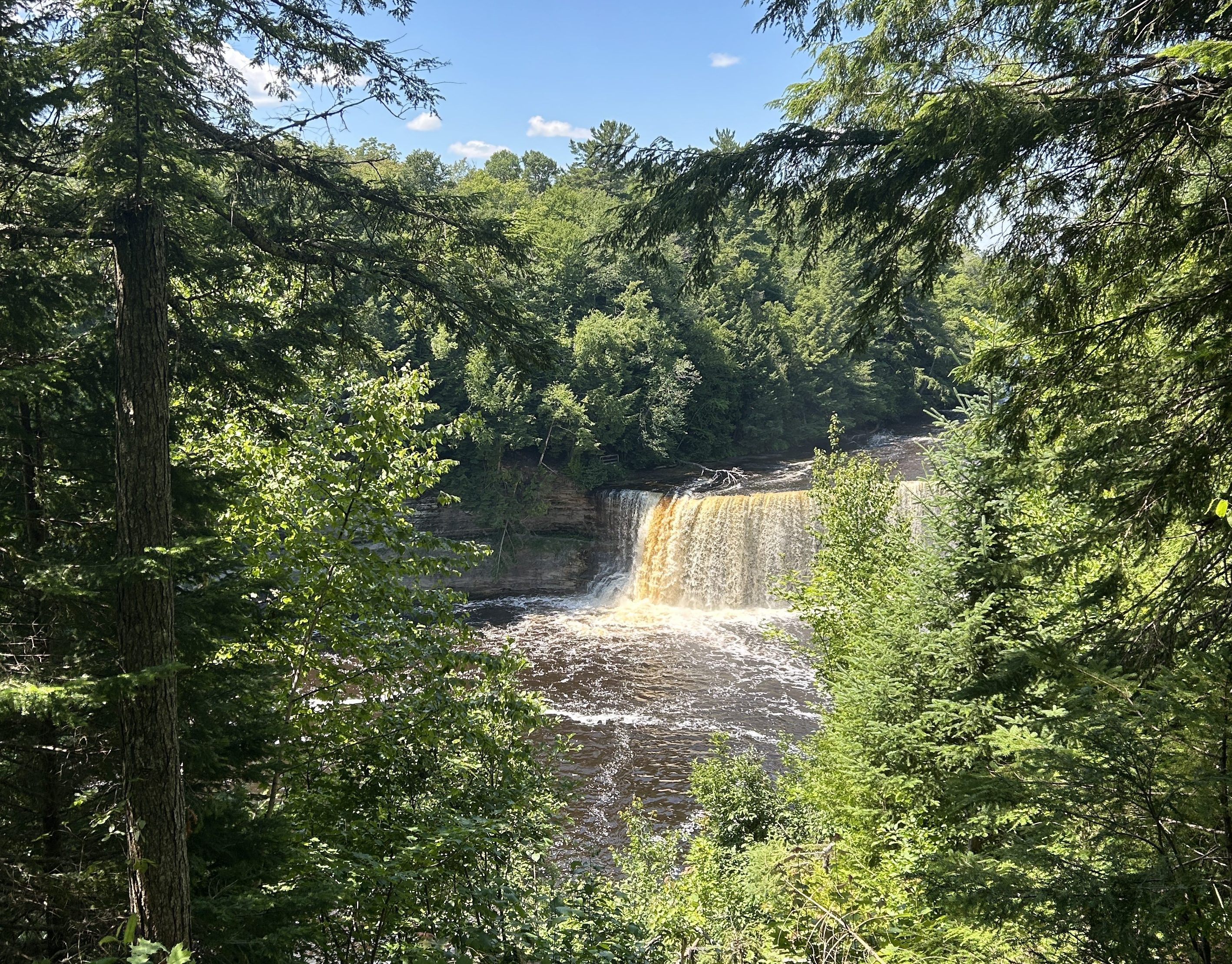
- Taquamenon Falls State Park: Just a day trip from the Soo, is one of the BEST waterfalls in all of Michigan: Taquamenon Falls. On Daunis’ visit with Jaime and Ron, she says that,“the frothy brown water of the wide river resembles root beer as it cascades over a fifty-foot drop that will continue to the Lower Falls downriver” (pg 133). I have visited Taquamenon Falls twice and each time it is spectacular. I recommend going early to avoid the crowds or visiting at a less busy time of year like spring or autumn.

Overall, I would rate the book 4 out of 5 stars. I did not give it a perfect 5/5 because I thought it was a little long winded at moments, and was disappointed that certain plot lines were not explored entirely. Still, growing up in Michigan I have spent many nights sleeping under the stars in the UP (Upper Peninsula). The north woods along the Lake Superior coastline is one of my favorite places in the world and to see it depicted so gracefully in Boulley’s novel is one of the reasons I would recommend it to anyone.
For a long time, indigenous voices and perspectives have been underrepresented in literature. As I read Firekeeper’s Daughter the powerful scientific descriptions and indigenous knowledge reminded me of Robin Wall Kimmer, a citizen of the Potawatomi Nation, a writer, and a botanist, and her memoir Braiding Sweetgrass. In Kimmer’s novel, she navigates some of the same struggles Daunis does in confronting the contradictions between western science and Indigenous teachings as she recounts her training to become a Botanist.
Although fictionalized, Firekeeper’s Daughter sheds light on the injustices indigenous people, specifically women, endure. In the United States, Indigenous women face disproportionately high amounts of violent crime. According to the National Congress of American Indians, “More than 4 out of 5 American Indian and Alaska Native women (84.3 percent) have experienced violence in their lifetime.” It is also estimated that Indigenous women “face murder rates more than 10 times the national average.”
Even as a YA novel, Boulley does not stray from the hard truth and these acts of violence against women reappear throughout the plot line and are central to Daunis’ character growth. This is why Boulley’s writing is so important, she brings the conversation to the forefront. I hope that in the coming years more indigenous authors like Boulley and Kimmer receive the attention they deserve, so that these injustices reach ears beyond reservation lands.
Transparency disclosure: Buying through the book links to Amazon on this site could earn Travel Muse Magazine commission, at no cost to you (it comes out of Amazon’s end). Thanks for helping us maintain this site, while also getting a good book to make your travels better!


Leave a Reply