
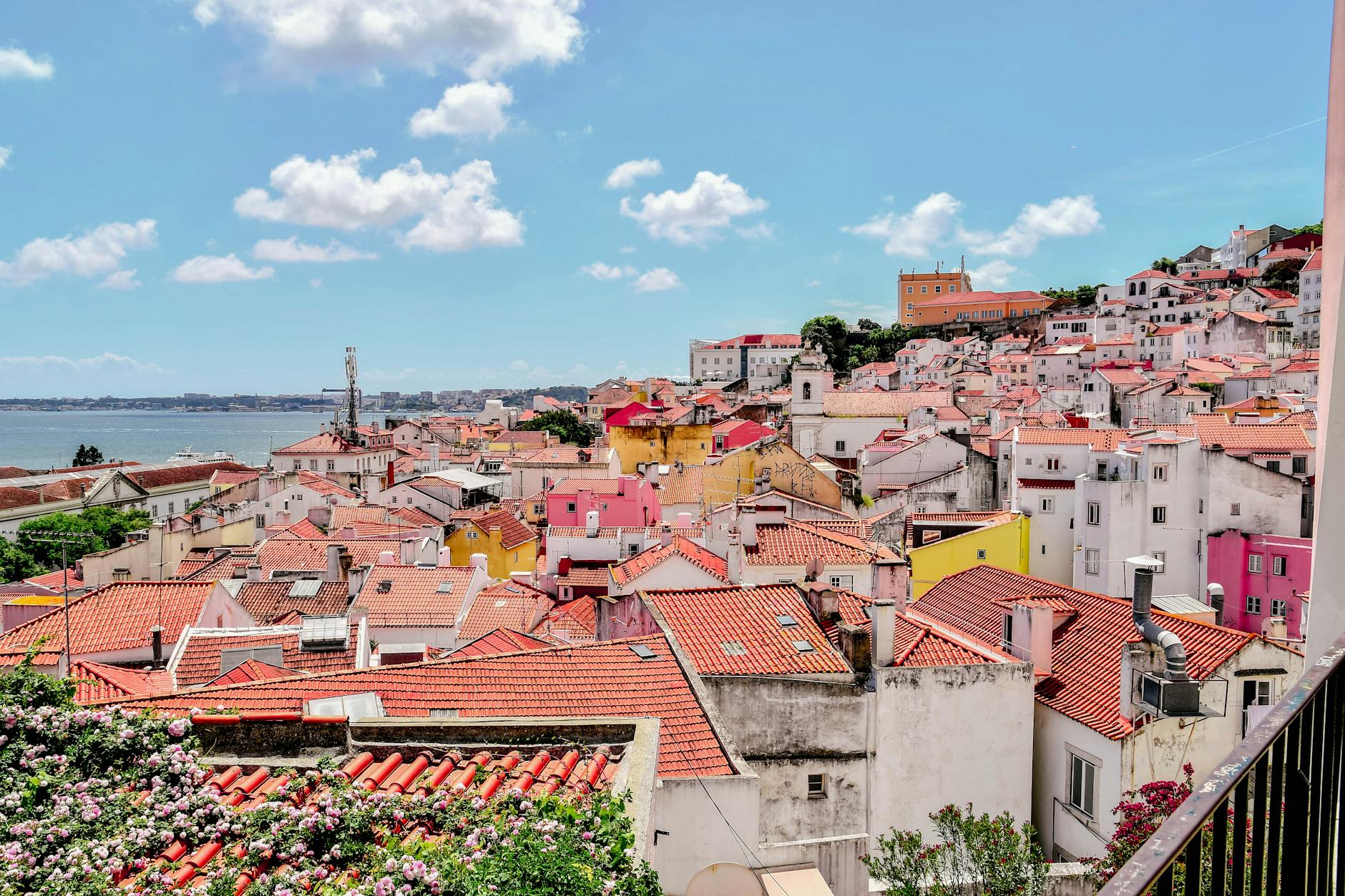

I’ve always been drawn to mystery novels. The kind that makes you double-check locked doors and reread sentences, searching for what you might have missed. So as I started preparing for my own trip to Lisbon, I picked up Two Nights in Lisbon, expecting nothing more than a suspenseful story to pass the time. Instead, I found myself pulled into a version of the city that felt both vivid and unsettling, where something as simple as waking up alone in a hotel room could unravel into something far more sinister.
Set against the backdrop of winding alleyways, tiled facades, and riverfront views, Lisbon becomes part of the mystery itself. In Two Nights in Lisbon, author Chris Pavone crafts a thriller about Ariel Pryce, whose husband disappears while they’re on a trip abroad, forcing her to confront secrets that stretch far beyond the city. What I loved most about this book is how it transforms a beautiful travel destination into something tense and unpredictable.
When Ariel wakes up to find her husband gone, she launches a frantic search across the city. As she retraces his steps, what first seems like a simple missing persons case quickly begins to unravel into something much more complicated. At its core, the novel is about deception, identity, and how little we fully know the people closest to us. I appreciated how Pavone made Lisbon into a driving force of the story. It’s scary not just because of the twists, but because Lisbon feels so alive that you can almost trace Ariel’s footsteps through the city yourself.
To fully experience Two Nights in Lisbon, you have to see the city the way Ariel does: beautiful but fragmented and slightly off-balance. Each location in Lisbon adds another layer to the story, blending history, culture, and atmosphere into the unfolding mystery.
The search begins in Praca do Comercio, one of Lisbon’s most iconic squares, where the city opens up to the Tagus River. The space is framed by grand yellow buildings and archways, allowing crowds to move steadily through. In the novel, Ariel repeatedly returns here while searching for answers. Even in such an open and public place, her sense of urgency and isolation remain constant. This space captures Lisbon’s balance between structure and openness. Spending time here will allow you to slow down and take in the rhythm of the city.
Carmo Restaurant & Bar is another critical point of the story. At this point, Ariel focuses on whether her husband had a reservation here, one of the last details that might prove his disappearance was unplanned. Located in the Chiado district, the restaurant is known for its stunning rooftop views that overlook the city. “Golden light is washing the facades of the buildings at the very tops of hills” (pg. 126), capturing the beauty of Lisbon from above. You can book your own reservation on their website, with additional updates and events shared through Instagram.
Aloma is a popular Lisbon bakery, known for its pastel de nata (but of course). The bakery fills the street with the rich scent of butter, sugar, and freshly baked pastry, making it a must visit for an early morning treat. As Ariel walks past, she is immediately struck by the “emitting different aromas, the butter-and-sugar richness of pastry from one and the flour and yeast from another” (pg. 15-16).
Beyond the city center, landmarks like Ponte 25 de Abril (the “25th April Bridge”) begin to emphasize Lisbon’s scale. Stretching across the Tagus River, the bridge connects different parts of the city while highlighting just how vast it really is. In the book, it’s called “the Golden Gate-esque bridge spanning the narrows” (pg. 16). For Ariel, the bridge is the start of her reflection into the many places her and her husband, John, visited. While you cannot walk across it normally, you can cross by car (toll south-to-north only for €2.53) or by train.
Moving through the city requires constant navigation, and few experiences capture that better than Tram 28. Riding Tram 28 is one of the easiest ways to see the city all in a single journey, taking you on a 7km scenic route from Martim Moniz to Campo de Ourique. The book describes it as “lurching around sharp corners, up and down steep hills, like a vintage roller coaster, crowded and uncomfortable and more than a little scary” (pg. 28). Today, visitors can hop on at various stops throughout the city to experience the same winding journey firsthand, though it’s best to go early in the morning to avoid the busiest crowds. You can purchase a single ticket onboard for €3.30.
The Gulbenkian Museum has art that ranges from Antiquity to the early 20th century and is “a brutalist hulk with one of the world’s great private art collections” (pg. 28). The museum reflects Lisbon’s role as a crossroads of global influence, where different histories and artistic traditions intersect. Formerly a convent that has been converted into a museum of towels, a trip here will certainly help you learn about the city’s cultural depth. And it’s supposed to finally reopen July 2026!
The Museu Nacional do Azulejo (or National Tile museum) is dedicated to Portugal’s iconic ceramic tiles. These intricate designs are a defining feature of Lisbon’s visual identity, covering buildings, churches, and public spaces. Seeing the tiles up close reveals the history embedded in the city’s architecture. The museum is currently closed as of the writing of this article, with a tentative reopening date set for June 2026.
By night, Lisbon takes on a different energy entirely in places like Pink Street, where music, lights, and crowds fill the streets. Once a historic red-light district, the area has been transformed into one of the city’s most vibrant nightlife destinations. The street is marked by its signature pink-painted pavement stretching between bars and clubs. The bold color reflects Lisbon’s modern identity, turning the street itself into a cultural landmark. In the novel, Pink Street mirrors the unpredictability Ariel faces as events continue to unfold.
Alfama is the oldest district in Lisbon, “a labyrinth of narrow cobbled lanes and steep staircases and ancient whitewashed buildings with red-tile roofs, the only section of Lisbon left unscathed by the 1755 earthquake and tsunami-and-fire aftermath” (pg. 37). Its maze-like streets showcase the city’s deep history and cultural roots, offering glimpses into everyday life that have remained unchanged for generations. Exploring Alfama on foot is one of the most immersive ways to experience Lisbon, where every turn reveals tiles, hidden courtyards, and stunning viewpoints. Pro-tip: Go early before the cruise ships dump thousands of people into these tiny streets and the miradouros get over-crowded!
Bairro Alto is another of Lisbon’s historic neighborhoods, known for its narrow streets, nightlife, and centuries-old buildings. In the day, you can wander through its steep streets, stepping into small boutiques or restaurants, feeling the beauty that Ariel fell in love with. As you walk through the streets yourself, keep in mind “the narrow streets strung with party lights and laundry lines, dish towels and soccer jerseys flapping above clustered of tables in front of cervejarias and tabernas, hole-in-the-wall convenience stores, boutiques selling sneakers, sardines, a mind-boggling array of items made from cork” (pg. 16). Walking through Bairro Alto allows you to experience life in the city, making it a place where Lisbon’s personality fully comes alive.
Review
Rating: 3.5 ⭐️
Two Nights in Lisbon is a slow-burning thriller that rewards patience. While the novel is very atmospheric, it takes time to fully settle into its central mystery. The first half of the story feels deliberate and at times sluggish, but once the story shifts and the stakes become clearer, it transforms into a much more gripping and engaging read.
As noted in a review from The New York Times, “‘Two Nights in Lisbon’ strays so far from its original setup that it feels like more than one book. Most of what we know about Ariel casts her as a relatively conventional figure, but Pavone ratchets up his story to create impossibly high stakes.” This reflects my own experience reading the novel. The first half focuses a lot on characterizing Ariel and helping the reader understand that she has her own secrets to hide. But once we get into the actual mystery, it becomes far more intriguing.
Two Nights in Lisbon reminded me of Gone Girl, as both stories begin with a missing spouse and gradually reveal deeper layers of deception within a relationship. In both books, the truth is not immediately clear, and each new detail shifts the reader’s understanding of what actually happened.
What makes this a compelling place-based story is how Lisbon shapes the reading experience. From its winding streets and open plazas, the city mirrors the novel’s gradual unfolding. Location is central to the plot because the unfamiliar setting adds tension and uncertainty. Being in a foreign country heightens every interaction, making the mystery feel more disorienting.
If you like this book, you might enjoy The Lies I Tell by Julie Clark or the book or film adaptation of The Girl on the Train, both of which explore similar themes of deception, shifting perspectives, and the complexities of relationships.
I would recommend this book, especially for readers who enjoy place-based mysteries. Two Nights in Lisbon’s strength lies in how it pulls you into the streets of Lisbon, making the experience of reading feel like traveling through the city alongside the main character.
I would give the novel 3.5 out of 5 stars. While I enjoyed the plot, the pacing made me lose interest. As I mentioned before, the pacing in the first half felt slow, and it took awhile for the central mystery to fully take shape, which makes it harder to stay engaged at the beginning. Other than that, the story is filled with surprises and twists, but the ending perfectly tied everything together leaving me satisfied.
If you’re drawn to mystery stories, this is absolutely worth the read, and even more so if you’re planning a trip to Lisbon yourself.
Transparency disclosure: Buying through the book links to Amazon on this site could earn Travel Muse Magazine commission, at no cost to you (it comes out of Amazon’s end). Thanks for helping us maintain this site, while also getting a good book to make your travels better!


Leave a Reply