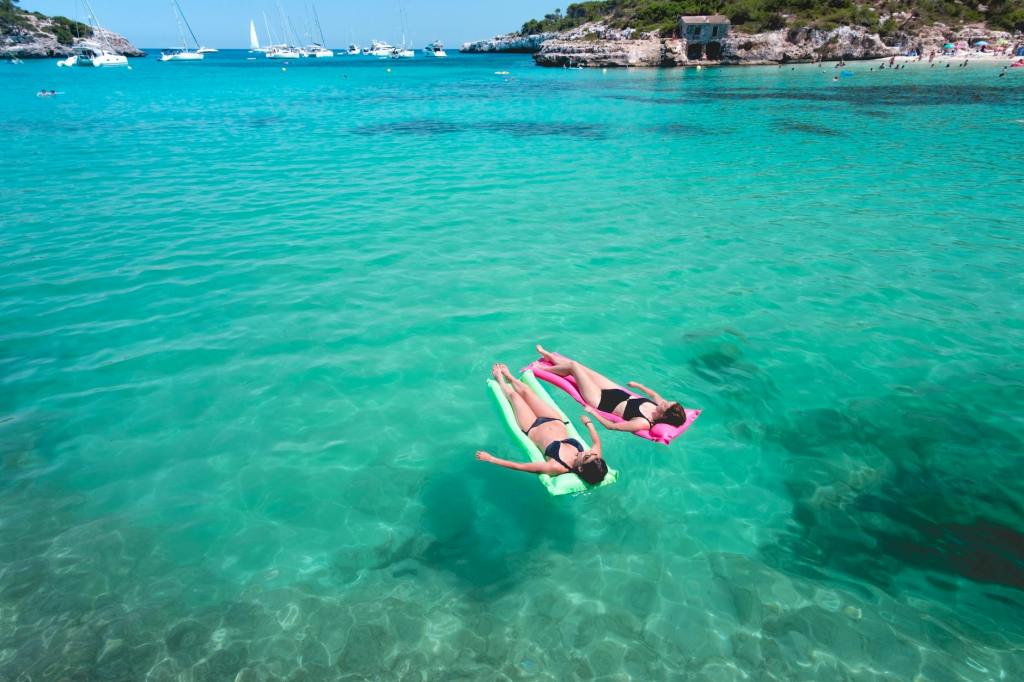
European vacationing. Island vibes. Summer sun. Beaches. YA meets adulting perspectives that understand the complexities of relationships at any age. Emma Straub’s The Vacationers novel has everything you want in a beach read. And it makes you want to visit Mallorca (Majorca in English) while you’re at it.
Mallorca is the largest of the Spanish Balearic Islands located in the western Mediterranean Sea due south of Barcelona. Straub describes the island as “summer done right” (p.21). She elaborates: “Mallorca was a layer cake — the gnarled olive trees and spiky palms, the green-gray mountains, the chalky stone walls… the cloudless place blue sky overhead” (p 21).
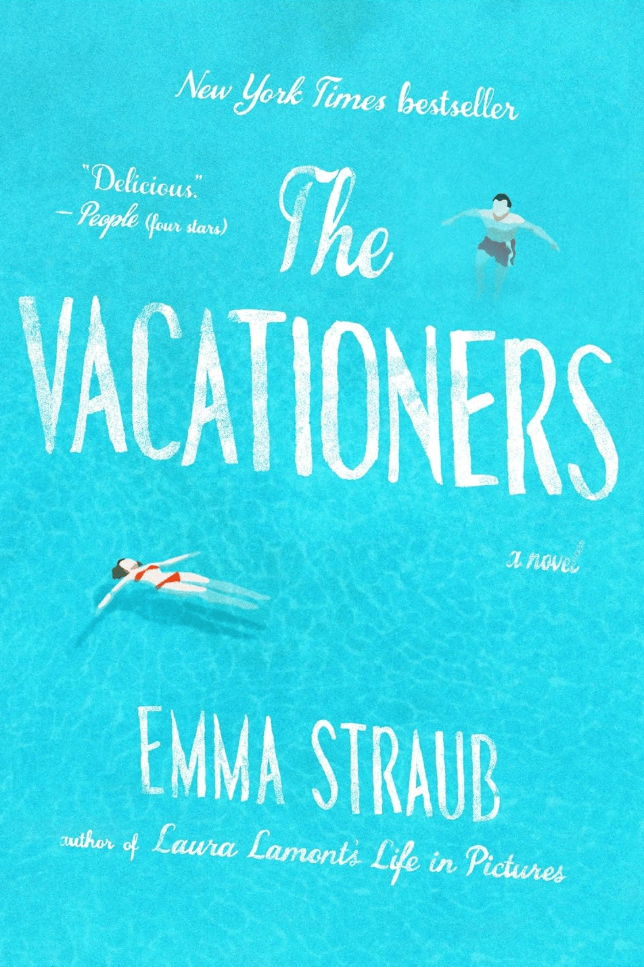
I picked up this book at random at a used book sale earlier this year because of the lovely cover. It features a woman floating in a turquoise sea front and center. (That called to me in the dead of winter when summer’s heat is forgotten and all that’s left is a mirage of vacation escapes.) She seems to have found some sort of peace, despite the non-descript guy looking on from across the cover. And then, coincidently, I learned about an educational conference in Mallorca and started looking into visiting the island. I immediately needed to learn everything I could and The Vacationers moved to the top of my TBR pile. So I dug in over the weekend.
This 2015 book may be a decade old, but the writing, characters and plot are all timeless. It was a quick read, low commitment and highly relatable no matter who you are, with perspectives from all the main characters: a young woman who just graduated from high school looking forward to her college life away from everyone she’s ever known; her mom, a writer dealing with a husband who just cheated on her; the cheating dad, who really does love the mom; their adult son and his older girlfriend; and the mom’s gay best friend and his husband… all of which are sharing a vacation home. There were plenty of complex ideas and issues mixed in with a beautiful location and light-hearted writing that really seemed to “get it” from all the perspectives. Just the kind of book you want to pick up to read on your holiday to one of Spain’s treasured getaways (with the country’s third busiest airport).
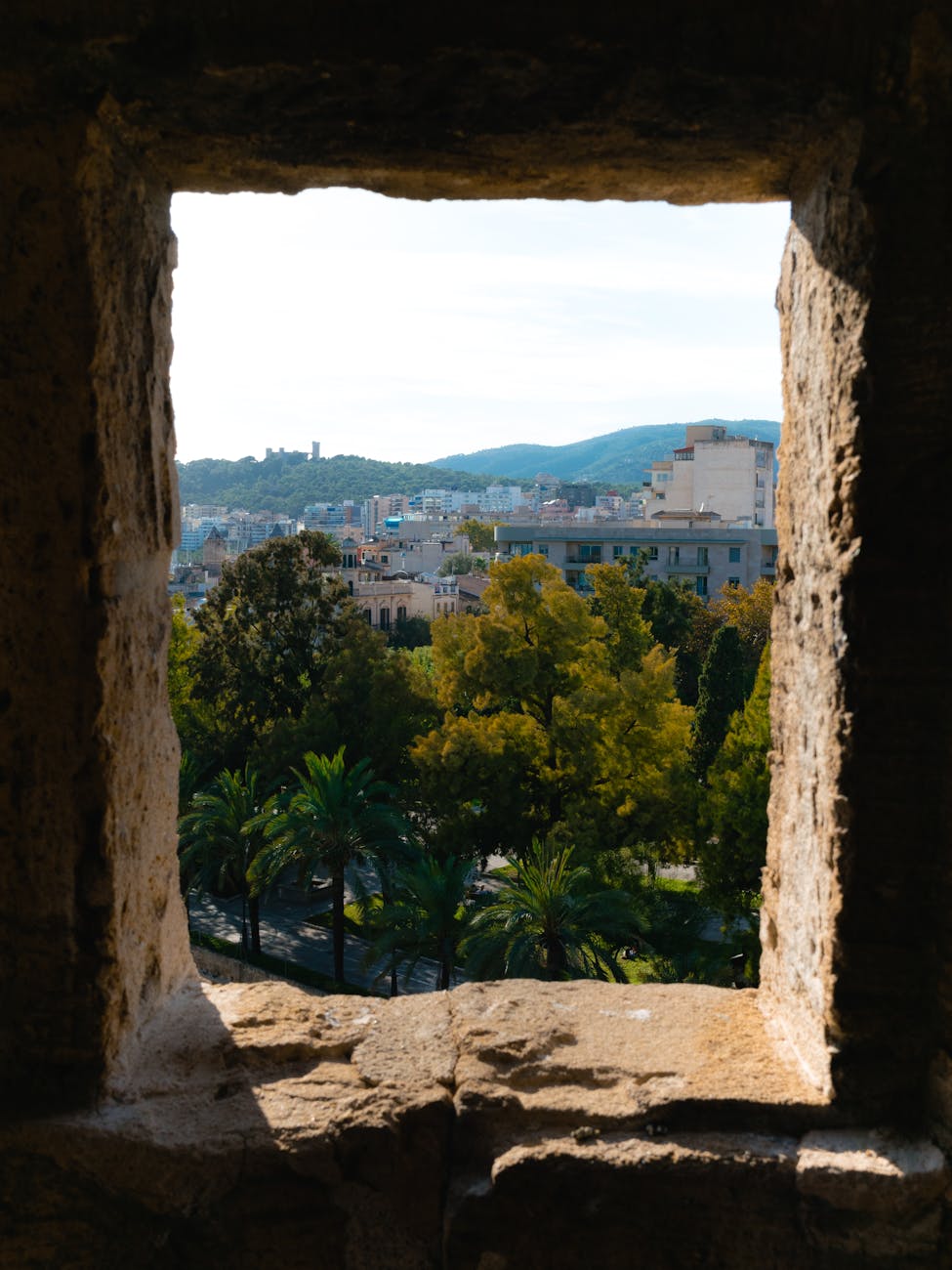
While Palma de Mallorca is the largest city of the island, it plays a minor role in the novel, which instead is mainly set in smaller towns. In a 2014 interview, Straub told Stet Magazine, “My husband and I spent two weeks in Mallorca last winter. It was fabulous—such good food, such nice people.” There are about a dozen must-see places featured in the book worthy of armchair traveling to until you can actually book your own vacay…
Puigpunyent, where the vacation home the Post family and friends live for two weeks is located, is about a half hour from Palma. “The charming village of Puigpunyent is nestled in a scenic valley on the southeastern slopes of the rugged Serra de Tramuntana mountains,” says the website SeeMallorca. “Its beauty is enhanced by forests of pine and evergreen oaks, along with groves of olive, almond, and carob trees.” It is in this tiny town that you’ll find Grand Hotel Son Net, the real-life location that inspired Straub, which she specifically thanks in the acknowledgements at the end of the book. This hotel was “declared a World Heritage Site by UNESCO,” according to its website, which adds that the manor “dates back to the 17th century.”
The characters’ first outing is to Deiá, home to British poet Robert Graves’s house museum. The writer and his then-partner poet Laura Riding built the home, which they named Ca n’Alluny (meaning “the distant house”) in 1932. Cala Deiá, the beach where Graves swam when he “needed to think,” is later mentioned in the book as one of the best on the island (p. 200).
Torrent de Pareis is one of two beaches at Sa Calobra on the northwest coast of Mallorca. This beach isn’t specifically named, but it is described in detail. The teenage Sylvia and her Spanish tutor Joan walk “through a tunnel cut into the side of the mountain,” coming out onto a “magnificent” beach that Sylvia describes as “literally the most beautiful place I have ever been in my entire life” (p. 258). According to the Mallorcan lifestyle magazine abcMallorca, “Sa Calobra is rather difficult to reach but the scenery around it is so breathtaking that it has become one of the most popular beaches to visit, particularly in the summer months.”
Mallorca is famous for its amazing beaches, so it’s no wonder that so many are featured in the book. While the one called “Badia del Esperanza” (p. 200) is fictional, its real-life counterpart is actually famously “glorious,” its Mediterranean waters “richly blue, with tiny waves lapping in and out” (p. 202). This is likely Playa de Santa Ponsa, which, according to Mallorca.com, has “pearl white sand [that] glistens in the sunshine and forms a stunning contrast to the turquoise sea.” It also has that “barrier of narrow pine trees” Straub features and is popular with families and tourists thanks to its calm waters.
Plaça Major in Palma is where the characters go out for a nice tapas dinner. Most of the time, they’re eating at their vacation home courtesy of the food writing mom’s amazing cookery skills. But the restaurant they go to is filled with Spanish delights. While no specific tapas spot is named in the novel, Bar Espanya, “a classic old-town tapas bar,” is tucked out of the way like the eatery featured in the book and, according to the local magazine Estilo Palma, one of the top 20 places to try traditional Spanish small plates. The thing to get: authentic pinchos, marinated, grilled skewers of meat, like kabobs. “It’s almost always bustling here, but that’s exactly part of the charm,” says the magazine.
As an island, you’re going to want to try fresh seafood here. While it isn’t named in the novel, Palma’s Restaurant Pesquero is a well-known spot on the paseo Marítimo perfect for tapas, seafood, and watching the fishing boats. This one seems exactly like the spot that Jim spies on Franny while she lunches with a famous tennis star turned tennis coach (p.249).
When college-bound Sylvia and her gorgeous hunk of a tutor head out on an adventure, they stop for sightseeing and coffee in Valdemossa, famous for the 14th-century Real Cartuja where composer Frédéric Chopin and writer George Sand wintered in 1838. (Sand is the pen name of Amantine Lucile Aurore Dupin de Francueil, who is known as one of the most notable writers of the European Romantic era.) It was here in Valdemossa that Sand wrote the “discontented” travelogue A Winter in Majorca. (More on that here.) For coffee in this quaint little town, Barbaflorida Cafè is the place to go, with both local artists and travelers giving it a shout out for coffee and breakfast.
Famed modern artist Joan Miro’s museum, “where the artist lived and worked from 1956 to 1983,” according to their website, is another stop for some of the book’s characters. (The hunky tutor is also named Joan, after the artist.) Fundació Miró Mallorca contains a gallery plus studio and printmaking spaces. I love the way Straub captured the joy one sometimes finds in tiny moments of vacation when you realize that the slowed down time seems “luxurious” (p. 137). The view here even gets a nod: “Outside the museum, below the city, the ocean was enormous and blue. That day smelled like jasmine and summertime” (p. 136). I can almost feel that relaxation wafting over across time and space to me now. Ahhhh!
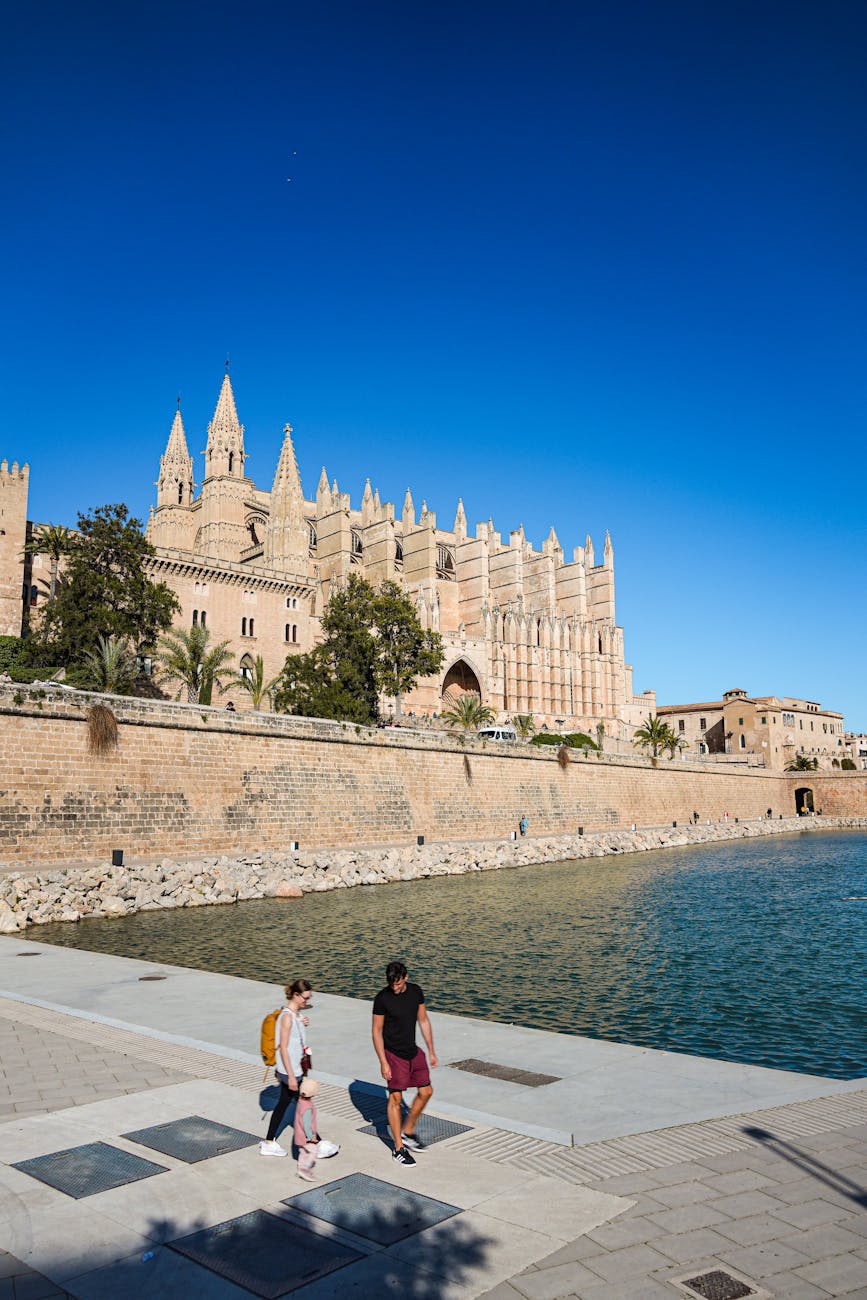
And while scantly mentioned in the novel except to orient the reader, the Cathedral of Mallorca in Palma (aka La Seu) is worth noting here too as a place to check out when you go. If you look at photos of Palma, you’ll see why this is THE place to mark as the center of the city. The huge basilica dominates the view of town from the shoreline. The nonfiction book I bought for my upcoming trip to Barcelona on architect Antoni Gaudi, features this Catholic church, as he was commissioned to restore it in 1901, which he did for a (controversial) decade from 1904 to 1914, according to Gaudi: Introduction to his architecture by Juan-Eduardo Cirlot (p.173). Though now, they’re proud to be associated with Gaudi, who is celebrated on their website. The cathedral itself was built in the “Mediterranean Gothic tradition” from the 1230s to the 1630s. As Ibostar puts it nicely, La Seu is “a faithful account of time, cast in stone.” You can go on a virtual tour of it here to get even more ready for your visit.
Mallorca has a lengthy literary tradition, long before the celebration of the island in The Vacationers. The Mallorca Literària Foundation created a free app called “Walking on Words.” This super cool project has seven walking routes to take visitors to the places highlighted in works of literature. Their goal: “conserve the cultural legacies of a land that has been a crossroads for different civilizations, maintaining its culture and traditions.” Reading The Vacationers and browsing these seem like the perfect thing to start pre-planning for a future trip here. I’m hoping airfare prices come back down so that I can go to my conference there and experience the beauty of Mallorca first hand. For now, we’ll just have to settle for armchair traveling!

 Travel Muse Magazine
Leave a comment