Tucked away in the Kerrytown neighborhood of Ann Arbor, Miss Kim combines Korea’s rich culinary traditions into a cozy dining experience. Just steps away from the city’s farmers market, the restaurant has been a staple here since opening in 2016 as part of the Zingerman’s Community of Businesses. On weekends especially, the space fills quickly with students, families, and other community members.
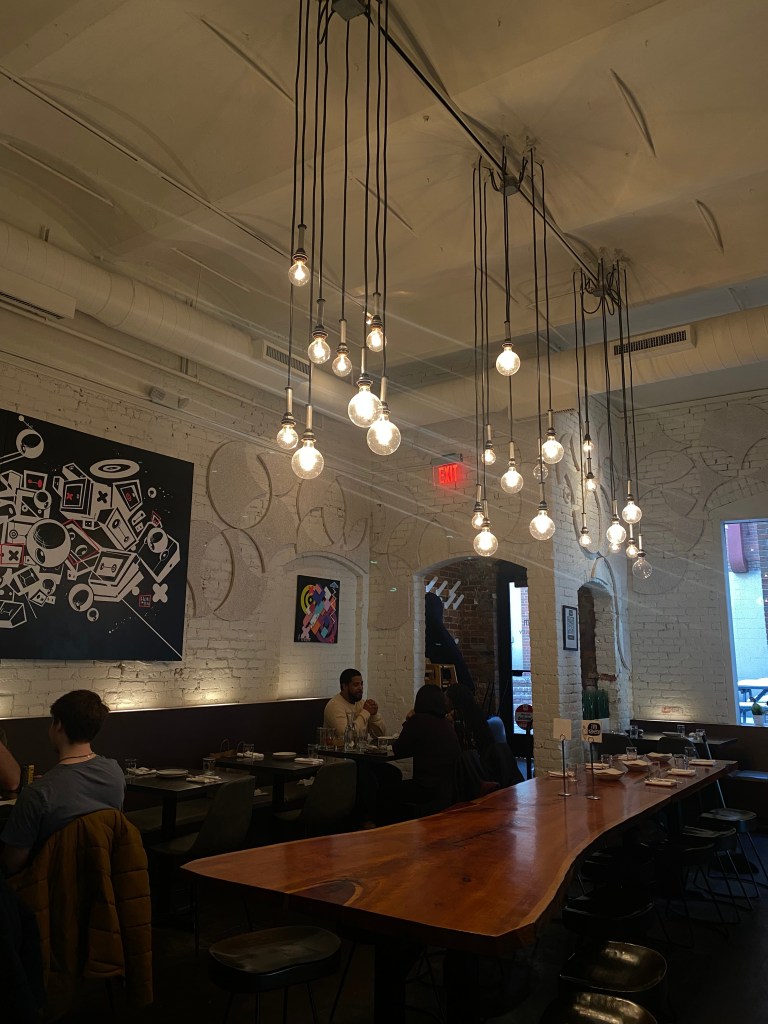
Upon arrival, the restaurant hums with conversation. Laughter fills the room. Inside the restaurant, dim lighting casts a warm glow over bold, abstract artwork that splashes color across the walls. Booths and communal tables create an inviting, shared atmosphere.
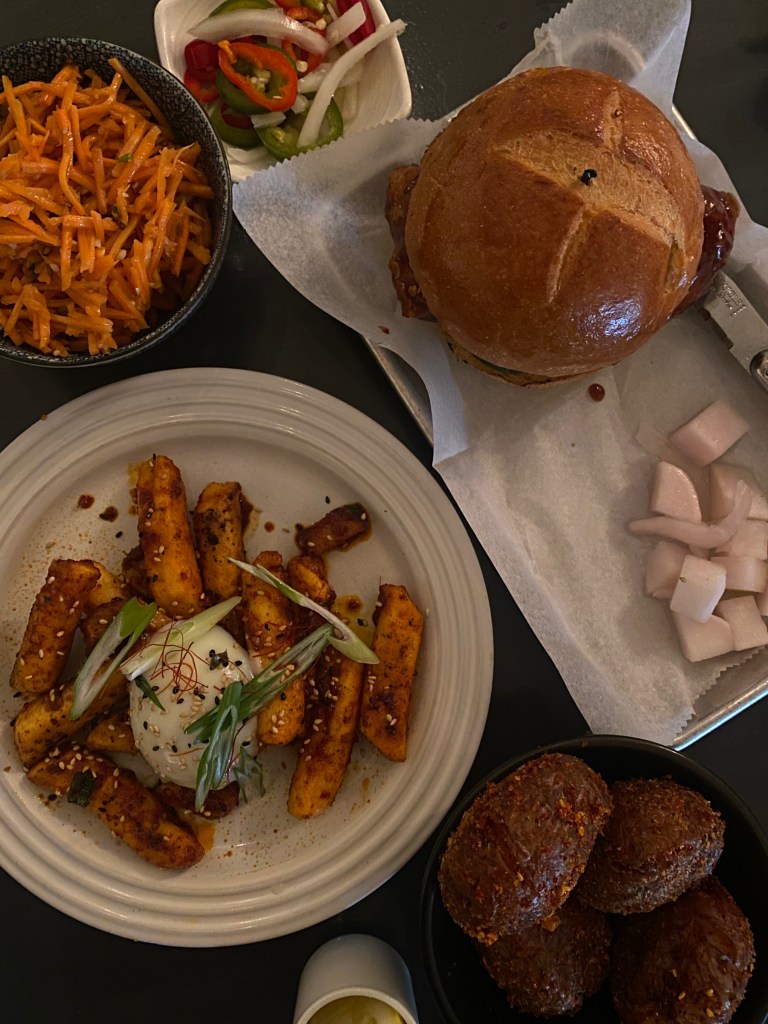
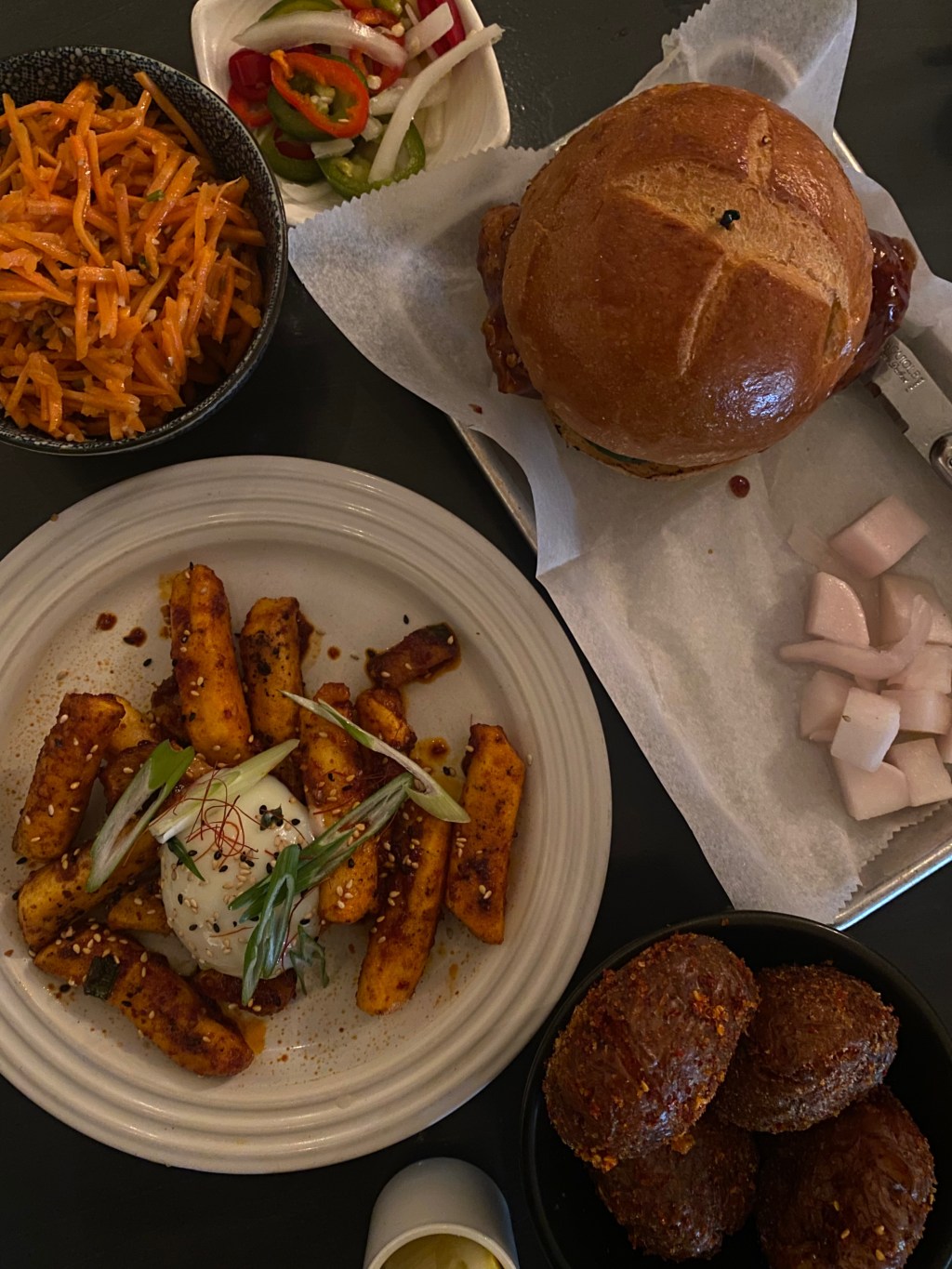
Signature dishes on the menu include the fried tofu, fried chicken, and tteokbokki. My friend and I ordered a sampling of things that sounded good to us on the cold February day we stopped by: teokbokki, mashed potatoes, carrot salad, and the chili glaze chicken sandwich.
Tteokbokki is a popular Korean street food made of chewy rice cakes stir-fried in a red chili sauce. The earliest records of this dish were soy-based and reserved for royal courts, steeped in a milder, savory tradition before chili peppers became widespread in Korea in the mid-20th century.
At Miss Kim’s, tteokbokki comes in 3 styles: “Cacio e Pepe,” “Royale Style,” and “Street Style.” I ordered the latter. The spice level was present but subtle, making it suitable even for diners like myself with a lower spice tolerance. The sauce smelled of warm heat and fermentation, making it impossible not to take the first bite immediately. The texture was slightly crunchy and satisfying. Compared to the versions I’ve had before, which were sometimes intensely spicy, Miss Kim’s interpretation feels more balanced and refined.
Tasting tteokbokki here reminds me of afternoons with my family back home in California. As a kid, we always went out to eat together after church and one of our favorite spots was a Korean restaurant where I tried tteokbokki for the first time. Eating it in Ann Arbor today, surrounded by chatter and warmth, I felt that same sense of comfort.
Another standout dish was the smashed potatoes, which our server generously brought out as a complimentary addition. Before ordering, she asked about our spice tolerances and preferences, making the experience feel extra meaningful. When the smashed potatoes arrived, they were served on a small plate, lightly garnished with Korean chilli flakes, pepper, salt and sugar. Unlike mashed potatoes, which are whipped smooth, smashed potatoes are crushed and fried, then tossed with seasoning. The result is a crisp, golden exterior with craggy edges that almost flake apart under a fork, while the inside remains soft and fluffy. The savory and herby aroma hit me immediately. Each bite offered a satisfying crunch followed by a warm, buttery softness. The seasoning struck the perfect balance between salty and savory.
At Miss Kim, the menu is about blending Korean history and Midwest culture.Techniques like fermentation, rice-based dishes, and chili pastes, meet Midwestern ingredients sourced from Michigan farms. Dishes such as the chili-glazed chicken sandwich or carrot salad show how Korean flavors adapt seamlessly to local tastes.
Miss Kim’s creator, chef and owner Ji Hye Kim “was born and raised in Seoul, moved to New Jersey as a teenager, and attended the University of Michigan.” Kim is now a “five-time James Beard Award semifinalist,” according to the restaurant’s website. What first began as a food court inside the market evolved into a full-service restaurant, and, most recently, a sister restaurant called Little Kim next door. While Miss Kim focuses on Korean cuisine, Little Kim is entirely vegetarian-focused and serves Asian-inspired dishes.
(February 16, 2026) Photo by Stella Ha.
Beyond individual dishes, Miss Kim emphasizes connections. The restaurant encourages visitors to share their food family style, with everyone at the table ordering dishes together and splitting across the table. Even as someone dining with just one other person, the experience felt communal. I noticed servers engaging warmly with solo diners as well, ensuring no one felt out of place. The care and intention the servers gave everyone hooked me and I will continue to come back for more.
In Ann Arbor’s dining landscape, Miss Kim stands out for its commitment to heritage and community. Through carefully researched recipes and genuine hospitality, the restaurant bridges Korea’s culinary traditions with Michigan’s Midwest charm. Eating at Miss Kim was a reminder that food carries memory, culture, and connection one bite at a time.

 Travel Muse Magazine
Leave a comment