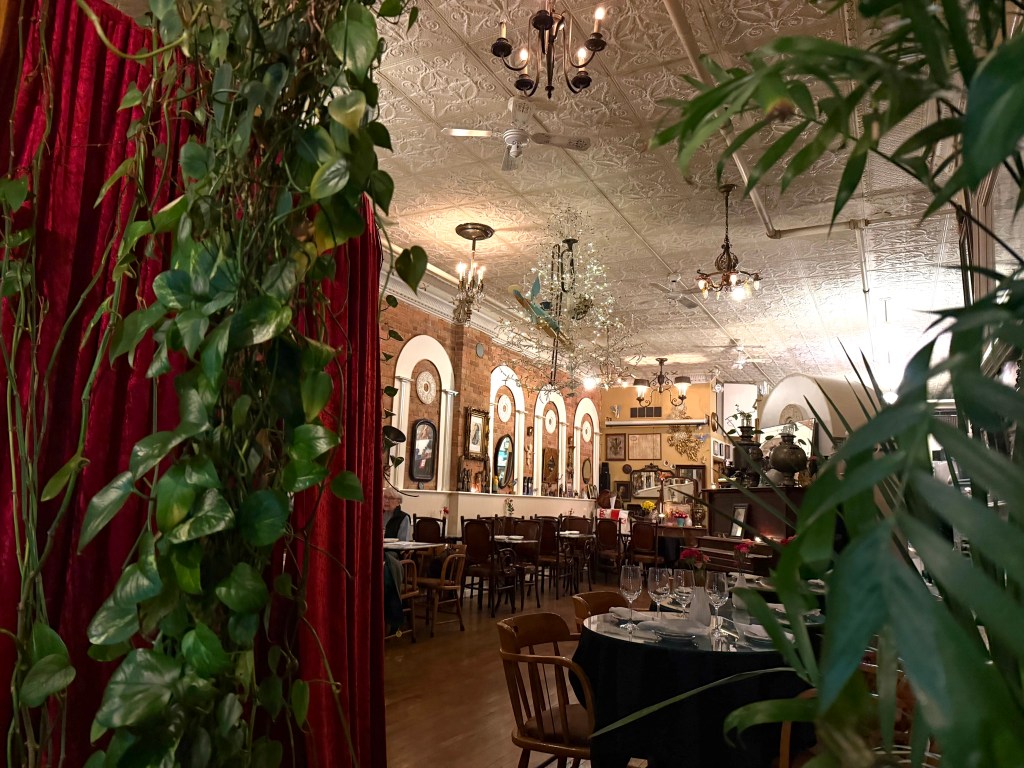
For those who have taken extended stays in Europe, particularly Americans, the churches, outdoor eateries, flaky pastries and winding staircases may have all begun to blur by the end of your trip. Pubs that look like artifacts and cafes with gilded mirrors and crisply pleated drapes become fixtures of daily life. There is something difficult to name about it — a quiet prioritization of atmosphere, of slowness, of aesthetic care.
We rarely recognize those qualities while we’re living in it. We find it later, daydreaming through our camera rolls in a midwestern March — full of grey snowy sludge and hopes of spring — or when curating carousels for our feed that read “Wishing I was in Amalfi.”
But what we’re really longing for is not simply the place, but the intention behind it — the decision to make life beautiful, and uphold it everyday.
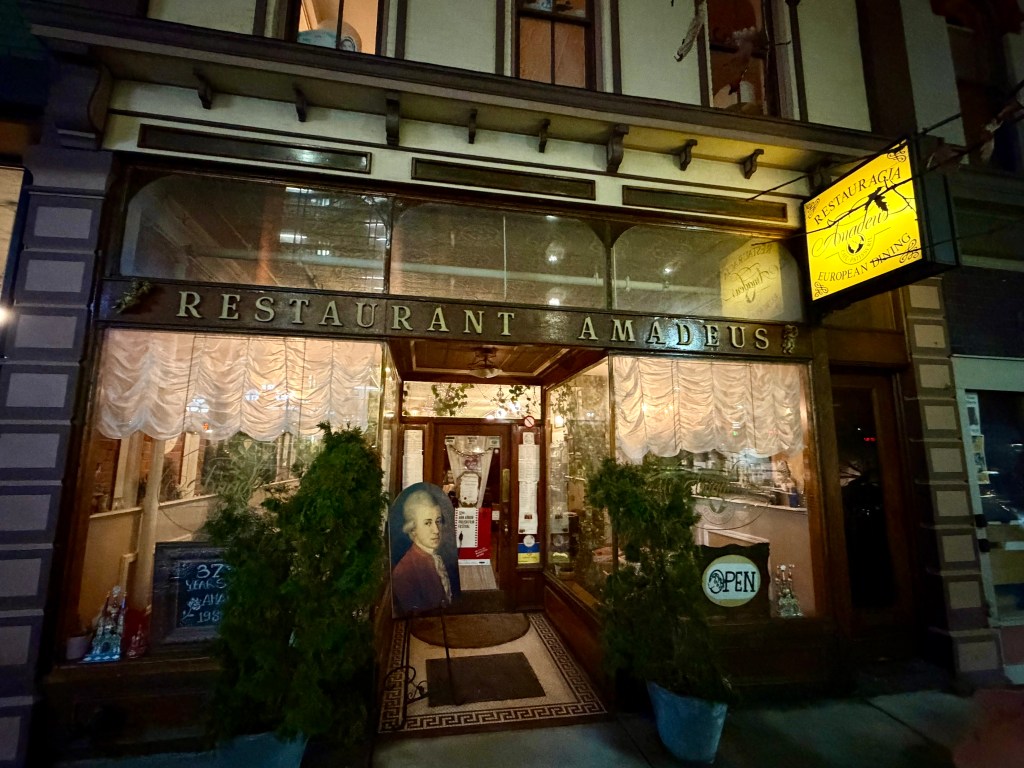
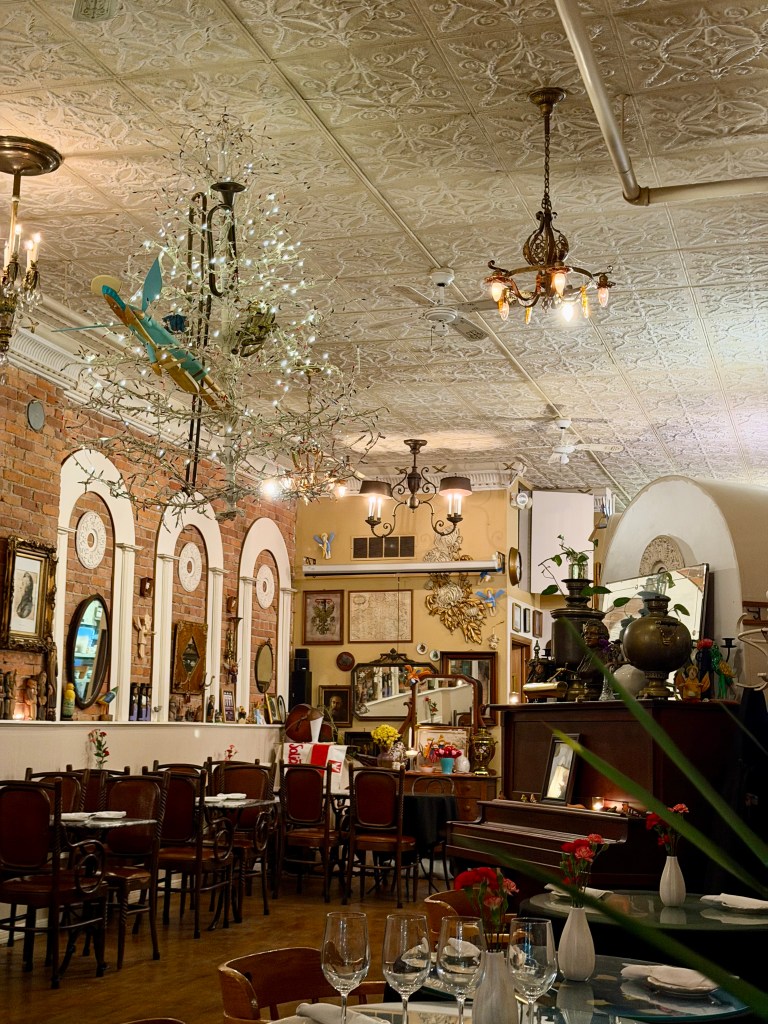
I was struck by that intention the first time I walked past Amadeus Restaurant and Café downtown Ann Arbor a few years ago, and even more so when I dared to linger over some paprikash for dinner.
A “world-class dining spot,” Amadeus riffs off of old world Viennese coffeehouses, known for coffee — always with a glass of water — served on silver trays, with marbled tables and upholstered sofas, functioning as third places. The restaurant is the life’s work of Pawel Strozynski, who left Poland in the early 1980s and spent years working across Europe before bringing Amadeus to Ann Arbor in 1988.
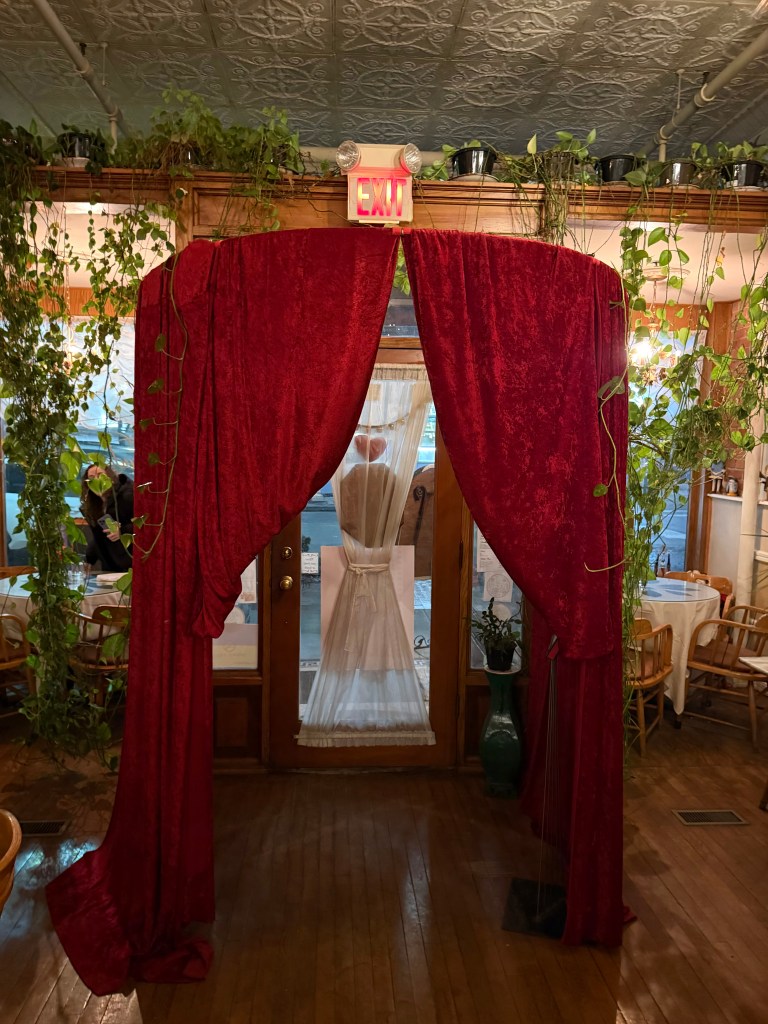
Inside a Victorian-era commercial building circa 1876 on E. Washington St., the entrance is fabricated in deep red, velvet curtains assembled into a vestibule. Step inside the door that creaks at you hello, peek your head through the curtains and wait to be seated.
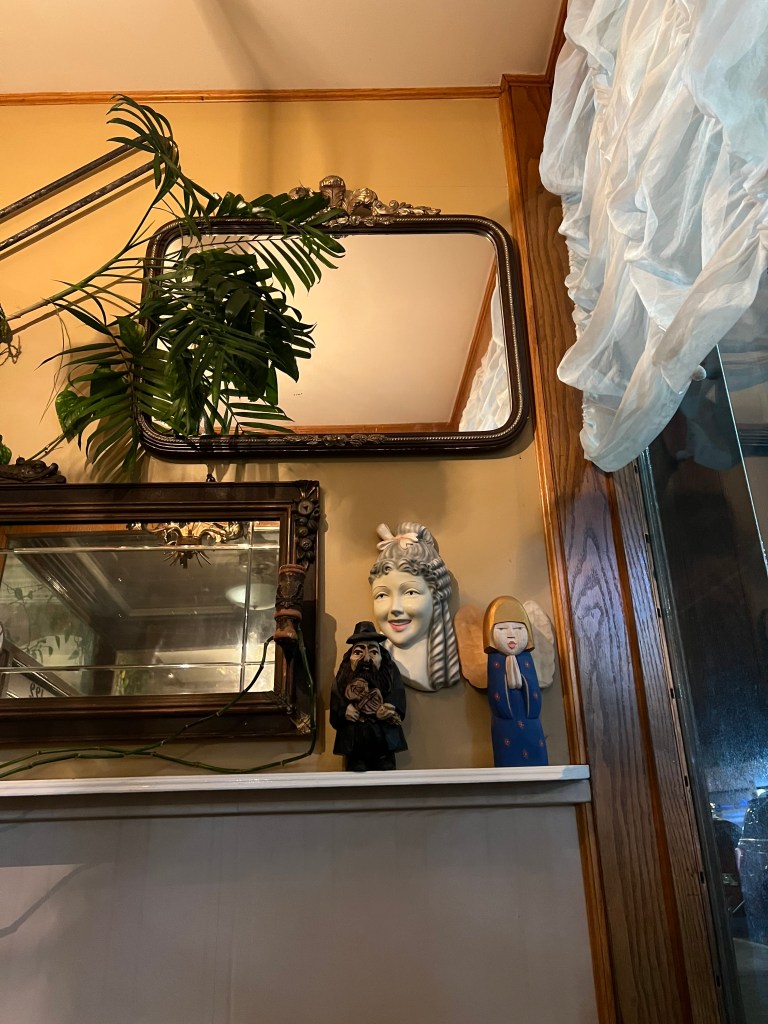
My roommate Gina and I were settled into one of the front window nooks. She’d spent the previous year in Sorrento, long enough to know how an unrushed dinner is supposed to feel. The clothed round table was set with appetizer plates, wine glasses and pink carnations, surrounded by photos, family tokens and shelves lined with wood carvings and candlesticks — pothos vines dancing overhead, occasionally grazing the back of your neck.
Our server, Michael, warned us Valentine’s Day “cleaned them out” of goulash and paprikash, suggested I go for the “Polish Plate” and my roommate (a vegetarian) the vegetarian plate respectively, making us laugh at least twice.
Accompanied by bread that stung my fingertips, the dill pickle soup arrived first — warm, briny, flecked with the fresh herb — and tasted like a Sunday at home. Ogorkowa, a dish rooted in Polish and Eastern European tradition, was born from the practicality of preserving vegetables through long winters, and is one I’d grown up eating at Polish restaurants throughout Metro Detroit without ever thinking much about where it came from.
My plate arrived with grilled kielbasa, bigos and a pierogi, but it was the golabki I kept coming back to. Stuffed cabbage is a dish I also know well — the kind you eat and hear your dad’s voice saying, “The sauce is too sweet.” Amadeu’s version reminded me that familiarity and intention are different things. The ground pork, rice, tender cabbage and rich tomato were all there, but perfectly packaged, and garnished with parsley placed like a period.
Across the table, Gina — who hadn’t expected much beyond the potato pancake — was working through her meal. “Great vehicle for the sauce,” she said, dragging it through a creamy white vinegar sauce. The plate also came with potato salad, a mushroom pierogi and dill pickles — an amalgamation of potatoes, she noted, but a good one.
The menu carries its history quietly. Golabki means “little doves” in Polish — a reference to the dish’s origins, when actual pigeon meat was wrapped in cabbage leaves for wealthy tables. Poor cooks later reinvented it with a blend of buckwheat and potatoes, keeping the shape and losing the extravagance. The dish appears as early as the 19th century in Polish cookbooks, with culinary writer Maria Marciszewska describing stuffed cabbage filled with duck, goose and pork wrapped in sauerkraut leaves — a recipe that shifted over generations into the ground pork and fresh cabbage version most recognize today.
Ogorkowa shares similar roots. Preservation food, winter food — the kind of cooking born from making something beautiful out of very little. In 1988, journalist Anne Applebaum wrote of Warsaw’s restaurant scene as a quiet revolution — small tables set up in back rooms, menus built around seasonal markets and ingenuity, thriving in the shadows of a failing state. That same year, Strozynski brought that tradition to Ann Arbor.
On our way out, an older couple sat in the middle of the restaurant, eating carefully, deep in conversation. They weren’t in Vienna, Warsaw or Sorrento. They didn’t need to be — just two chairs, each other and old stories at every table.
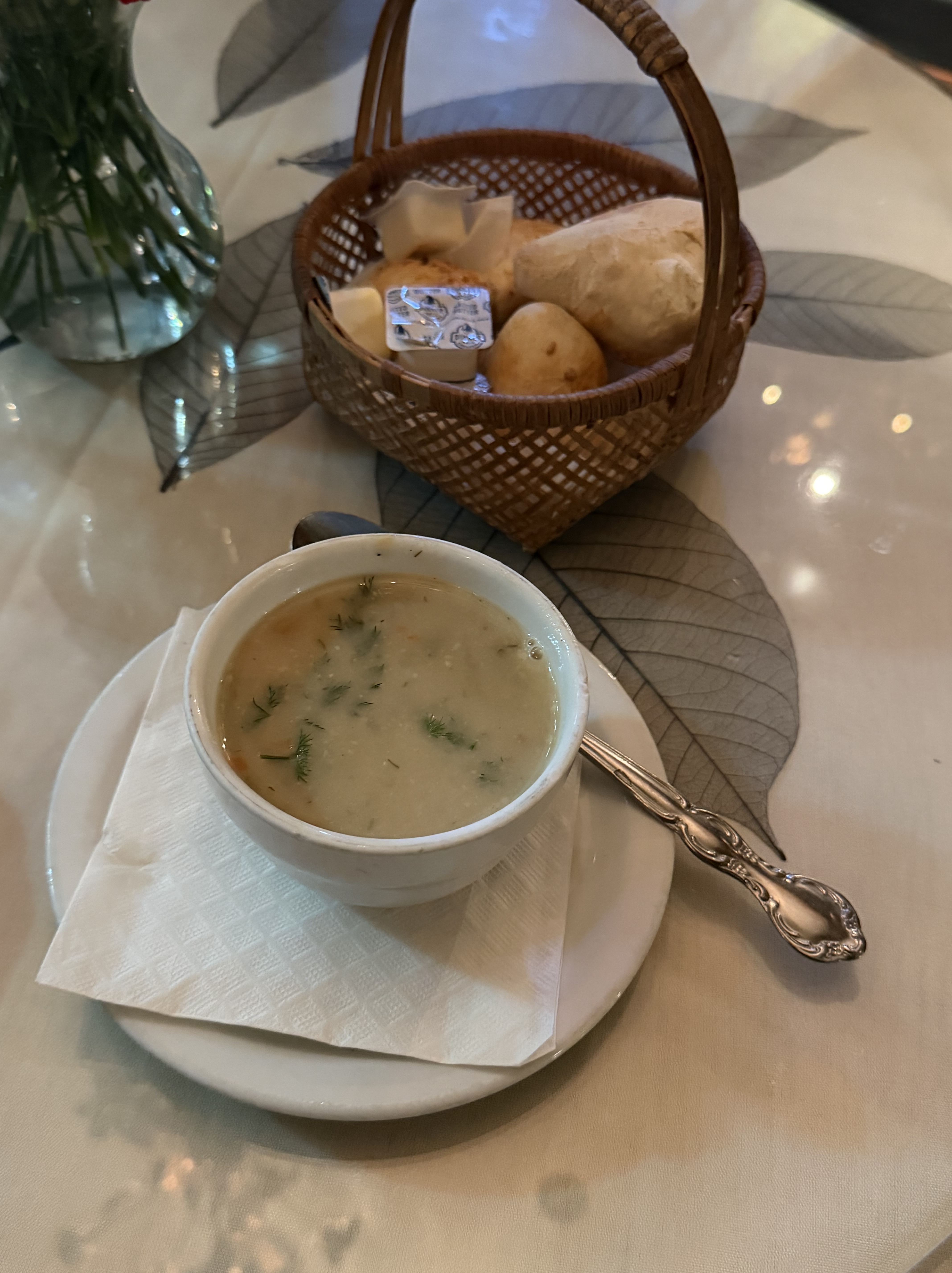
Tasty dill pickle soup — $5 for a cup, $7 for a bowl — and fresh bread. Photo by Barrett Dolata (February 17, 2026). 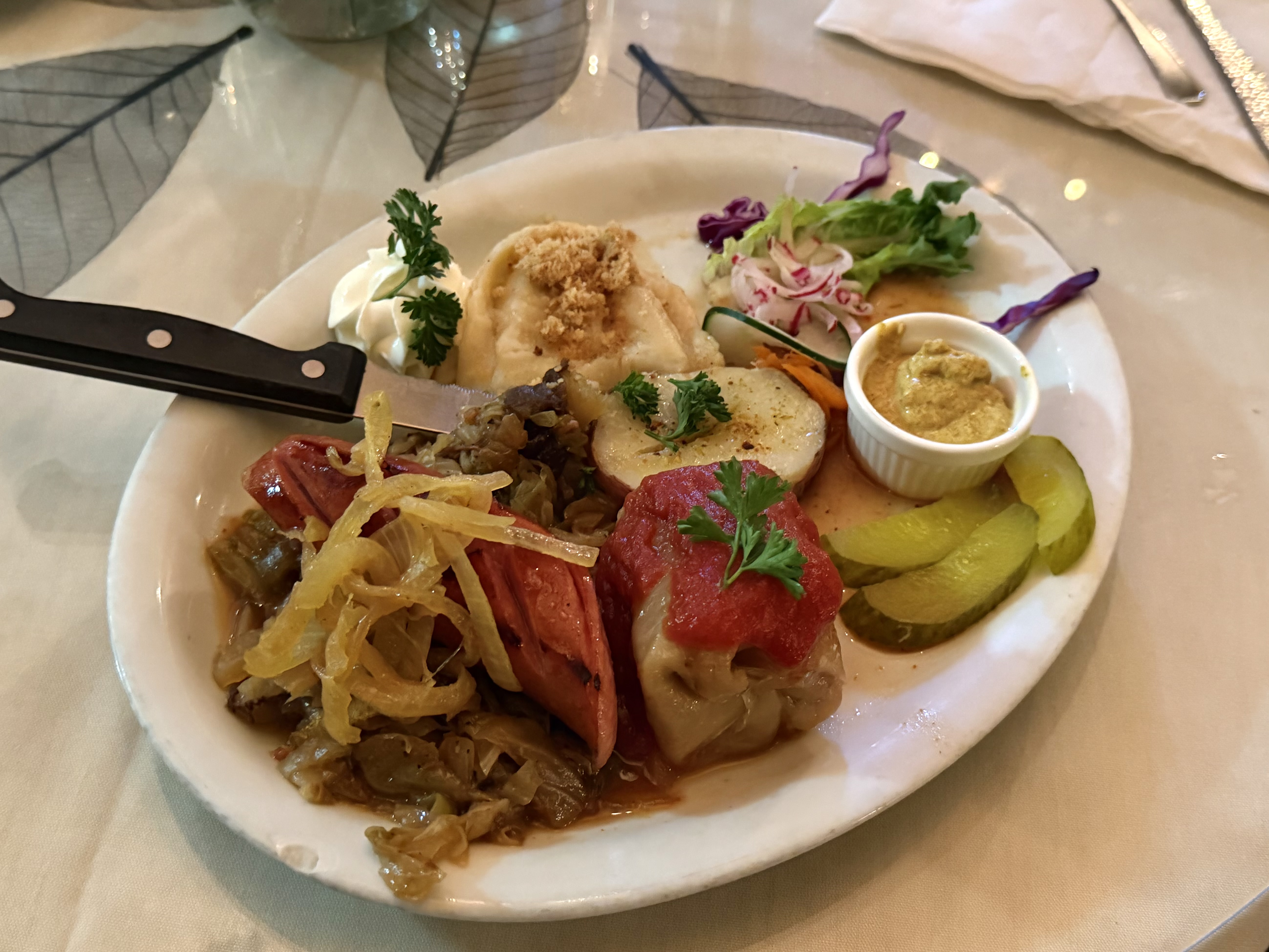
The Polish plate at Amadeus — for $27 — features grilled kielbasa, golabek, bigos and one pierogi (your choice of sweet cheese, mushroom, potato-American cheese, sauerkraut and potato farmers cheese). Photo by Barrett Dolata (February 17, 2026). 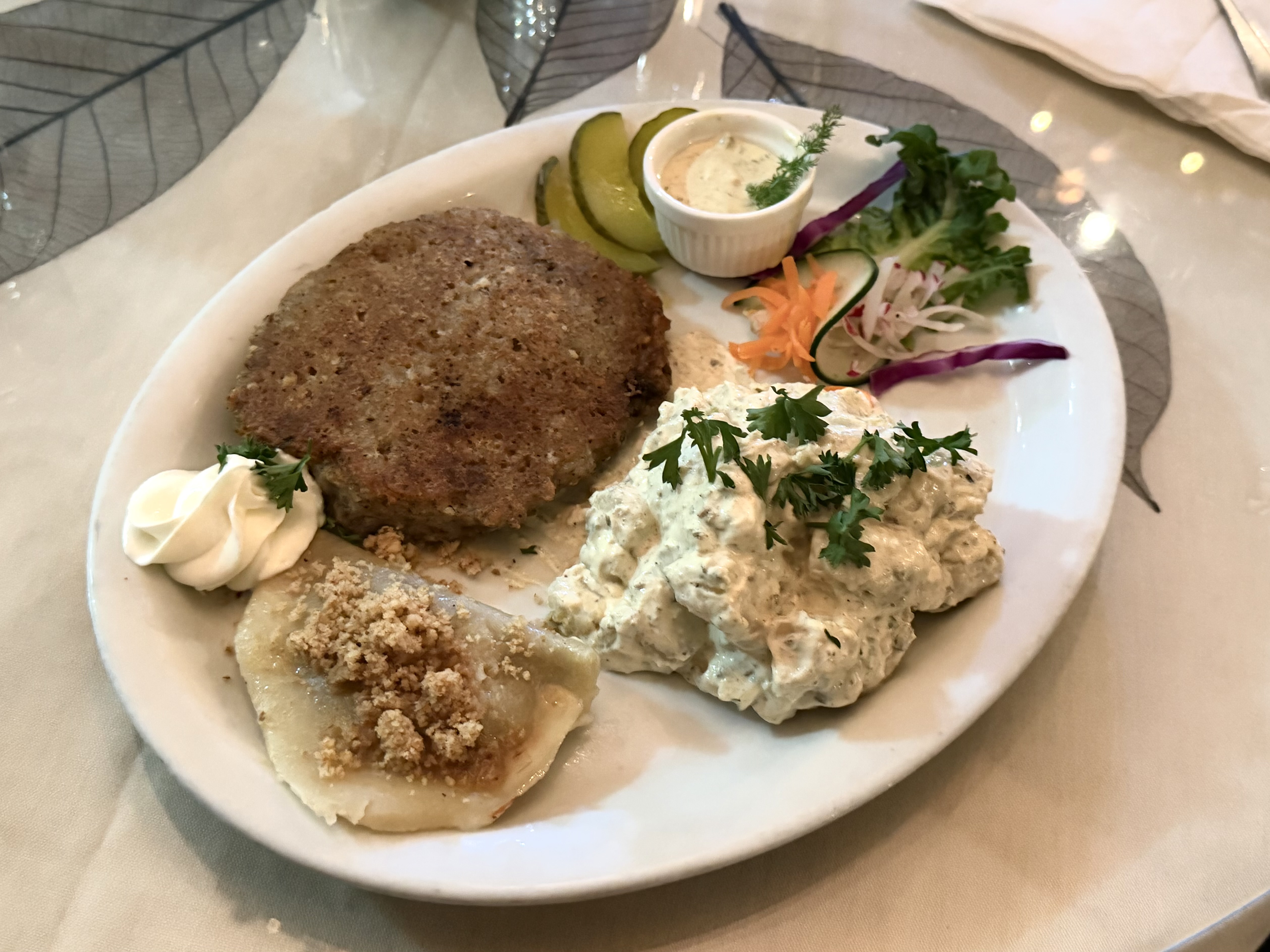
The vegetarian plate at Amadeus — for $23 — consists of a potato pancake, mushroom pierogi and potato salad. Salad and pierogi options vary. Photo by Barrett Dolata (February 17, 2026).

 Travel Muse Magazine
Leave a comment