Many dishes find their way around the world, but few have managed to balance their traditions and become global favorites as well as sushi. From its origins in Asia to the Tabe restaurant in Ann Arbor, this favorite has maintained its influence on culture, craftsmanship, and ritual.
My first time visiting Tabe was a pleasant evening walking downtown Ann Arbor; the area felt alive with people chatting, shopping, and eating. I immediately felt the warm, family-like atmosphere emanating from the friendly hostess and the Lunar New Year decor displayed right at the door. I would have never known this restaurant had only opened a year ago; the room felt as if it had existed much longer, in the staff’s easy conversations and even in how customers interacted with the food and culture. It’s no wonder they earned the honor of being the top-reviewed Asian restaurant on Google Reviews in the city.
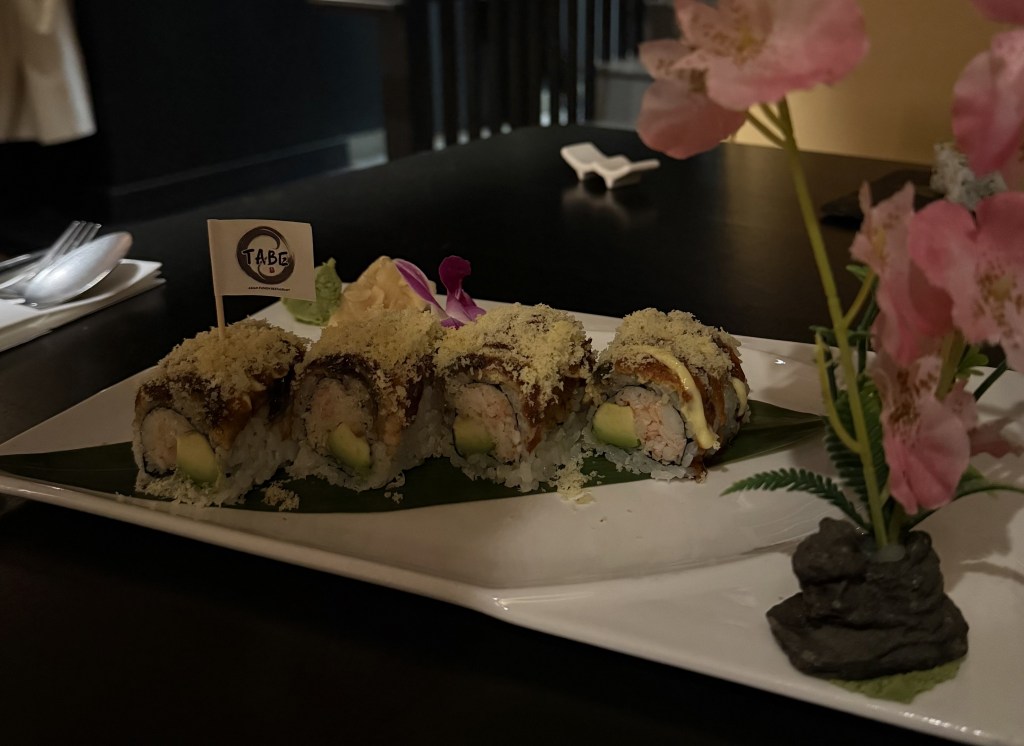
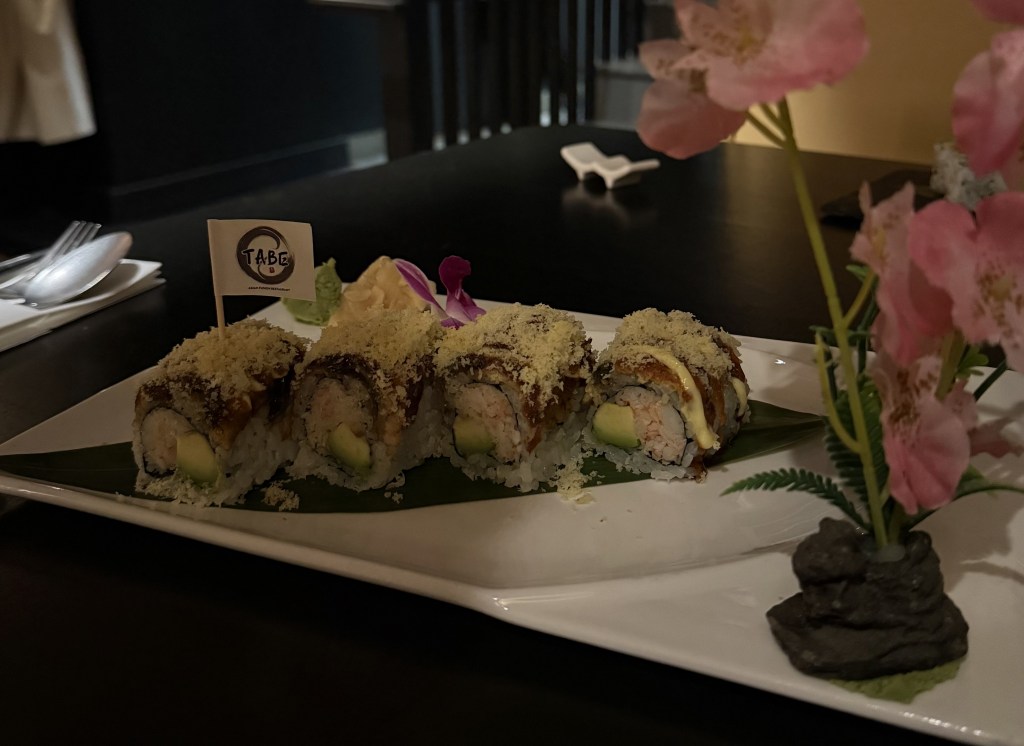
Known for its wide range of Asian cuisine, Tabe offers noodle and rice dishes, other entrees such as short ribs, and sushi. During my visit, I ordered the “Fire Dragon Roll,” made with snow crab, eel, and avocado. It had a crunchy breadcrumb topping, the fresh smell of a sea breeze, and, once dipped in soy sauce, a rich, umami finish. The snow crab melted in my mouth and contrasted perfectly with the more earthy eel placed on top of the roll. I brought a friend with me to get his take. He agreed, saying the flavors were well-balanced and the presentation was “intentionally elegant,” thanks to bright florals and a miniature Tabe flag on the plate. This presentation, with the sophisticated flavor combination of the sweet eel sauce, the acidity in the rice, and the nasally, sharp heat from the wasabi, left me wishing I could eat here daily.
Tabe, meaning “to eat” in Japanese and written as 食べ, is an Asian fusion restaurant, part of the Michigan-based “168 Group.” According to their website, Tabe was founded by Asian immigrants who have worked tirelessly over many years to share their love of food and their desire to give back to the Southeast Michigan community. From their dedication shipping fresh fish from Japan multiple times a week to the artwork by Jieyu Wang Alatchanian that portrays the “essence of zen” throughout the restaurant, Tabe is an A2 gem.
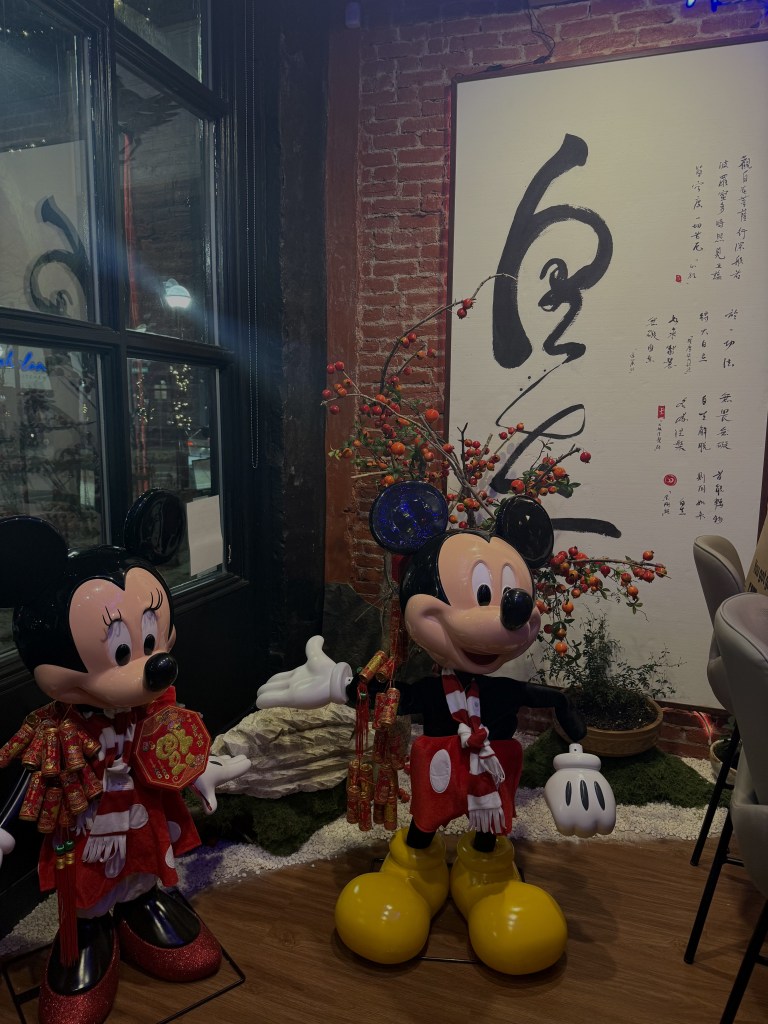
The artwork really stands out. One I could see from my spacious yet cozy booth represents the value of having the freedom to explore and the persistence to keep going when things get tough. It was placed on a simple white backdrop, with line art forming a mountain and birds flying above. The piece was mesmerizing, embedding Tabe’s history and values onto its very walls. Since opening, they have created an experience that sparks customers’ curiosity about Asian cuisine, preserves Japanese traditions in the restaurant, and educates patrons.
Well before my roll hit the table at Tabe, sushi began as something much simpler in the fourth century in China. Sushi’s true origins are not documented, but legend has it that a woman hid rice in osprey nests to protect it from thieves. Eventually, she discovered the osprey’s fish scraps, and her rice began to ferment.
Sushi was introduced in Japan in the ninth century and is attributed in becoming popular because of Buddhist beliefs that discouraged meat consumption. The most well-known early form of sushi is funa-zushi, first prepared in Japan with golden carp over 1000 years ago. Over time, innovation in the sushi-making process during the 15th and 16th centuries reduced the fermentation time for rice from over six months to just one month using rice vinegar, which became known as nama-zushi. Legend stems from this, also, saying that people in Tokyo were too impatient and wanted to speed up fermentation. Since then, sushi has continued to progress without breaking the tradition of fermented rice and fish. According to the book SUSHI: Food for the Eye, the Body & the Soul by by Ole G. Mouritsen, sushi has evolved to items like maki-zushi, sushi rolled in seaweed, and nigir-zushi, a rice ball with fish placed on top.
Today, sushi is a worldwide staple, with renditions made by other cultures, seen in such favorites as the California roll. No matter what’s rolled inside, there is an established commonality among types of sushi that are a reminder that this beloved food isn’t confined to history in books; it is something that respects the past and the present while enjoying every bite. Sushi’s story is centuries old, and thanks to restaurants like Tabe, its traditions will continue for generations to come.

 Travel Muse Magazine
Leave a comment