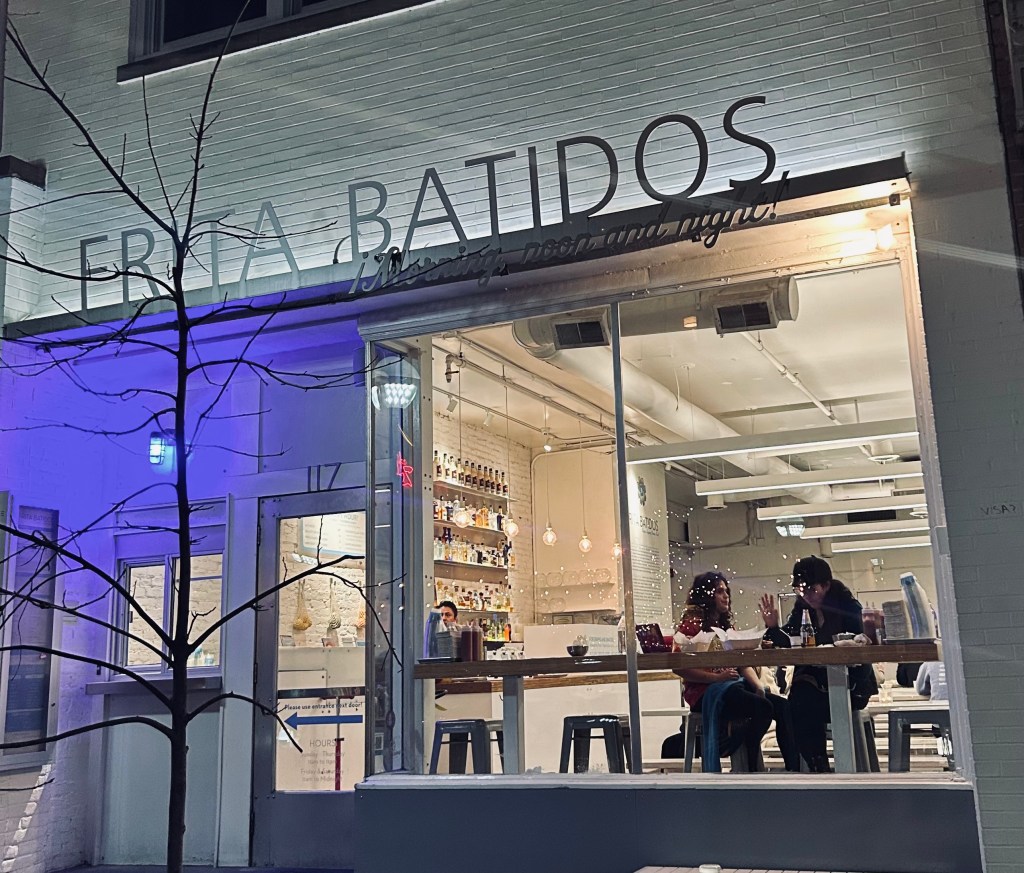
Frita Batidos hums with layered sounds of blenders, laughter, and orders being called out simultaneously. The space feels immediate and alive. Ivory picnic-style tables fill quickly in ceaseless waves, carton plates slide across wooden surfaces, and the scent of toasted buttery buns and spiced meat lingers aromatically in the tender air of the downtown Ann Arbor eatery. This is not quiet dining, it’s participatory, rhythmic, and intentionally energetic.
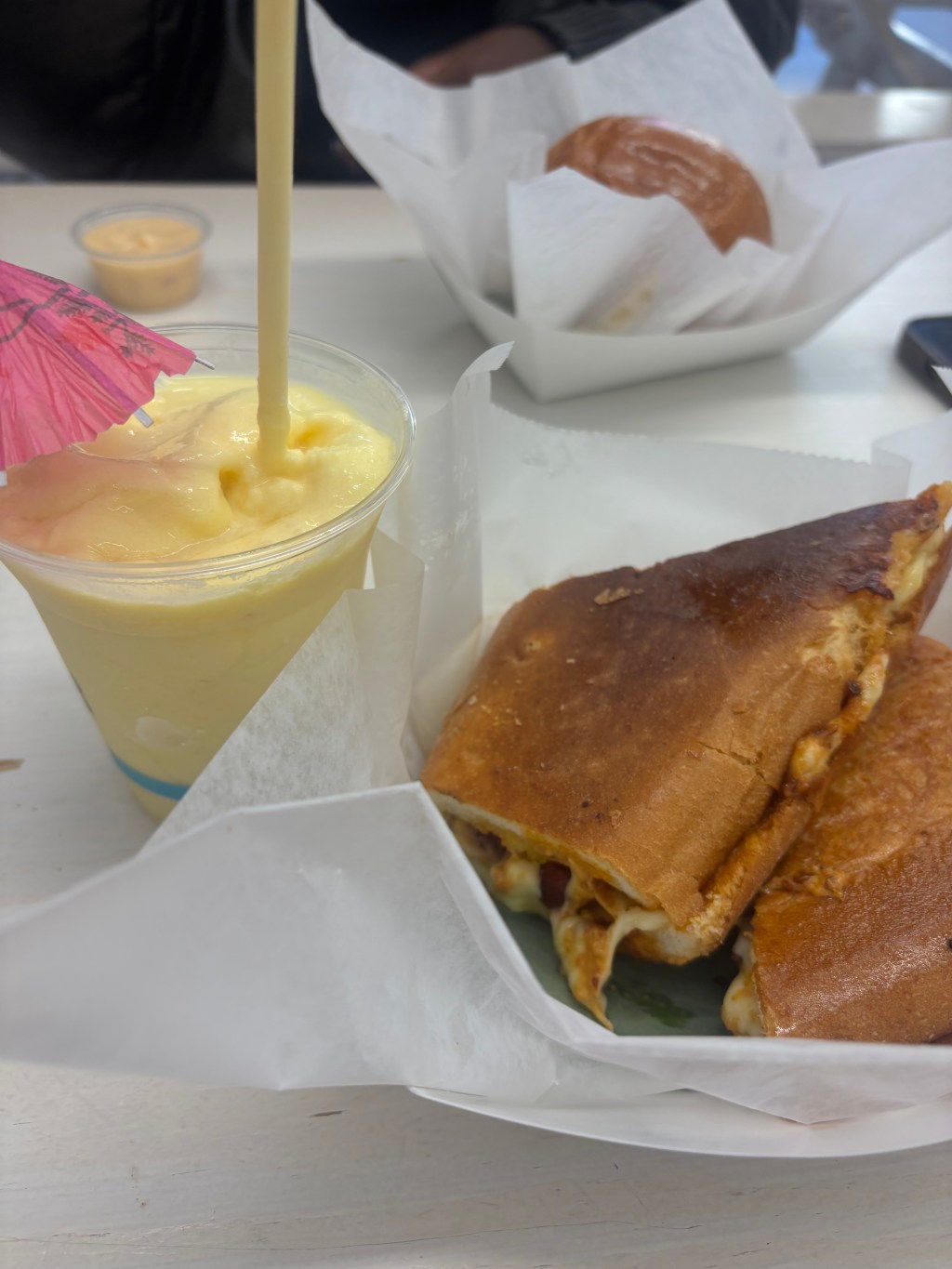
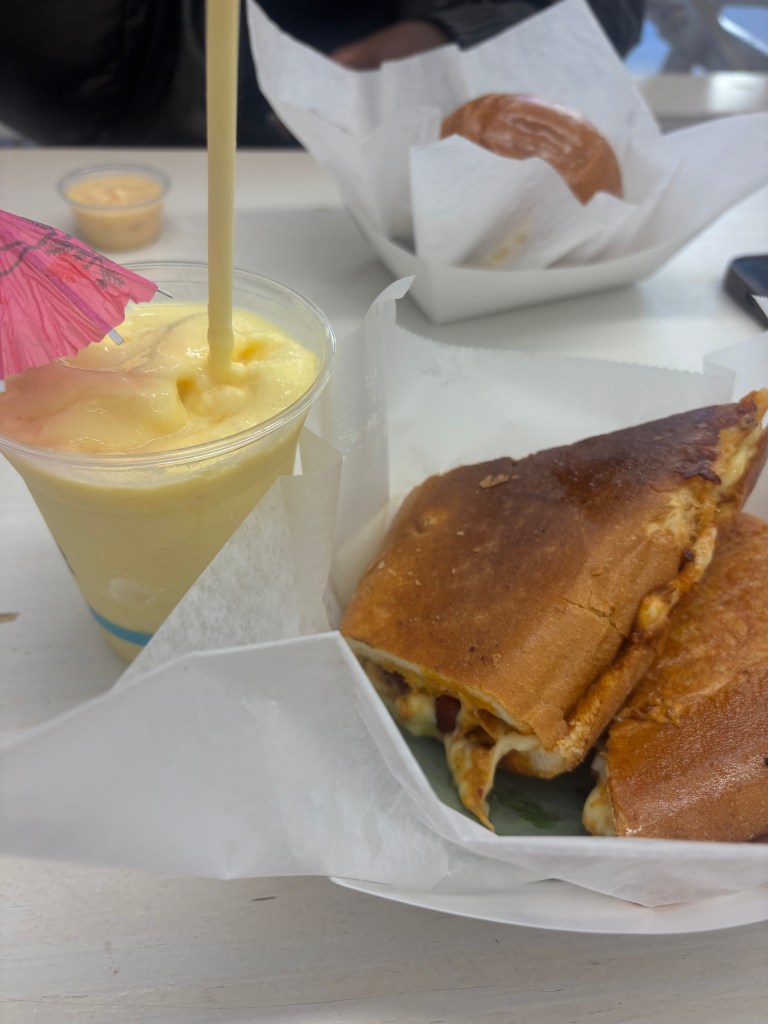
I ordered the “Inspired Cuban” sandwich and passionfruit batido (a tropical fruit milkshake-like drink that’s blended with crushed ice). When my order arrived, golden, warm cheese spilled dramatically from the sandwich, cascading over the side. My sandwich felt like an interpretation rather than a replica of the Cuban sandwiches I grew up eating in Miami, Florida. The pork was tender and savory, layered with mustard and gherkins that added the perfect acidity and snap. The bread was soft yet sturdy, compressing decadently under my fingers. Each bite balanced sweetness, salt, and tang in deliberate proportion. While not labeled as a traditional frita, it carries the spirit of Cuban street food: handheld, bold, and layered with texture. The batido complimented my meal. It glowed a soft yellow-orange, condensation gathering along the clear plastic cup. The first sip was bright and tart, passionfruit cutting sharply through the richness of the sandwich.
To understand eating a meal here fully, it helps to begin with the frita that rests as the first pillar of the restaurant’s name. The Cuban frita traces its roots to Havana street vendors in the early 20th century. Often described as Cuba’s answer to the hamburger, the frita traditionally combines seasoned ground beef or chorizo with paprika and garlic, topped with shoestring fries and served on a soft roll.
The second pillar of Cuban street, the batido, makes the meal feel like an echo of the American burger and shake combo, but with a distinctly indulgent Cuban flavor profile and texture. An angelic pairing! In Cuba, batidos are made from tropical fruits such as mamey, guava, or mango blended with milk and sugar. They are refreshing but substantial, often consumed as a cooling treat in scorching humid weather. My passionfruit version was lightly creamy but primarily vibrant and tart, acting as a palate cleanser between bites of rich pork. The cool condensation against my hand contrasted with the warmth radiating from the sandwich wrapper.
The eatery itself reflects its founder’s intriguing culinary journey. Frita Batidos was established in 2010 by chef Eve Aronoff Fernandez, a graduate of Le Cordon Bleu in Paris and former owner of the Ann Arbor restaurant “eve.” As she told The Michigan Daily in 2023, her approach blends classical techniques with global influence, drawing from Cuban inspiration without claiming strict authenticity.
That distinction matters. For instance, in regards to the traditional Cuban sandwich, it consists of warm and doughy Cuban bread, marinated citrus pork, honey ham, Swiss cheese, dill pickles, mustard, and butter. While the “Inspired Cuban” at Frita Batidos incorporates some of these elements, it does so lightly, and instead brings forward a more modernized version, with a new and invigorating flavor profile. The menu is Cuban-inspired rather than traditionally Cuban, filtered through her training and upbringing in Michigan and New York.
This seamless balance between cultural inspiration and local grounding is evident in the atmosphere. The bright walls and colorful menu boards evoke Caribbean vibrancy, yet the clientele is unmistakably Ann Arbor: students in UMich gear, families, professors, and visitors who’ve heard this is the place to come. The soundscape is constant; the open layout makes the kitchen somewhat visible, reinforcing the sense of food as performance.
Frita Batidos has since expanded beyond Ann Arbor, opening locations in Detroit and Brooklyn, evidence of its broader appeal. Yet, the Washington Street location retains the feeling of a campus ritual. It is a place where food functions as both nourishment and a gathering point. From the contentment the flavor of the food brings you to the simple act of sharing time with friends and family.
Eating here feels closer to street food culture than formal dining. The rich cheese and butter draped over the sandwich requires no fork and no ceremony. The batido is meant to be carried, sipped, and enjoyed without pause. The experience is social rather than solitary. You share tables with strangers. You overhear conversations. You become a part of the environment.
What lingers most is not just the flavor of pork and passionfruit, but the deliberate layering of histories. From Havana’s street vendors to a French-trained chef, to Michigan farmers, to a university town seeking comfort and excitement in equal measure. At Frita Batidos, fries sit visibly atop the fritas, but beneath them lies a story of migration, adaptation, and creative reinterpretation.

 Travel Muse Magazine
Leave a comment