
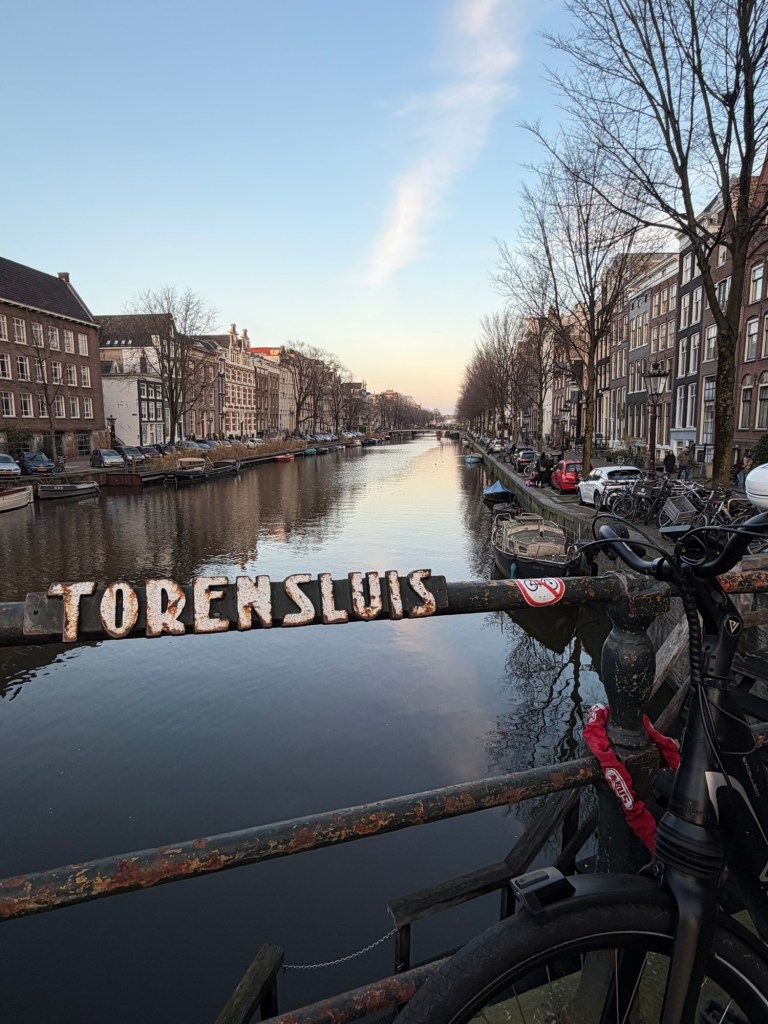
Amsterdam is unique. Glittering canals reflecting colorful four-storied, window-brightened (curtain-less) homes jutting up at sometimes curious angles (that reveal the floors inside are far from flat) are not something you’re going to see anywhere else. These water-streets are peaceful, even when scores of bicyclists are hurrying by on their way to work. It feels like a whole other world that’s operating in some sort of alternate reality drawn from some sort of artistic, modern futurescape that has a deep respect for its own past.
Yet, at the same time you’ll likely be surprised by the “too much tourism-y crapola” that is taking away from the city’s 750-year history of awesomeness. (Not that all of those years are awesome in themselves, so many were filled with horrible events, but still the city survived and prospered despite them.)
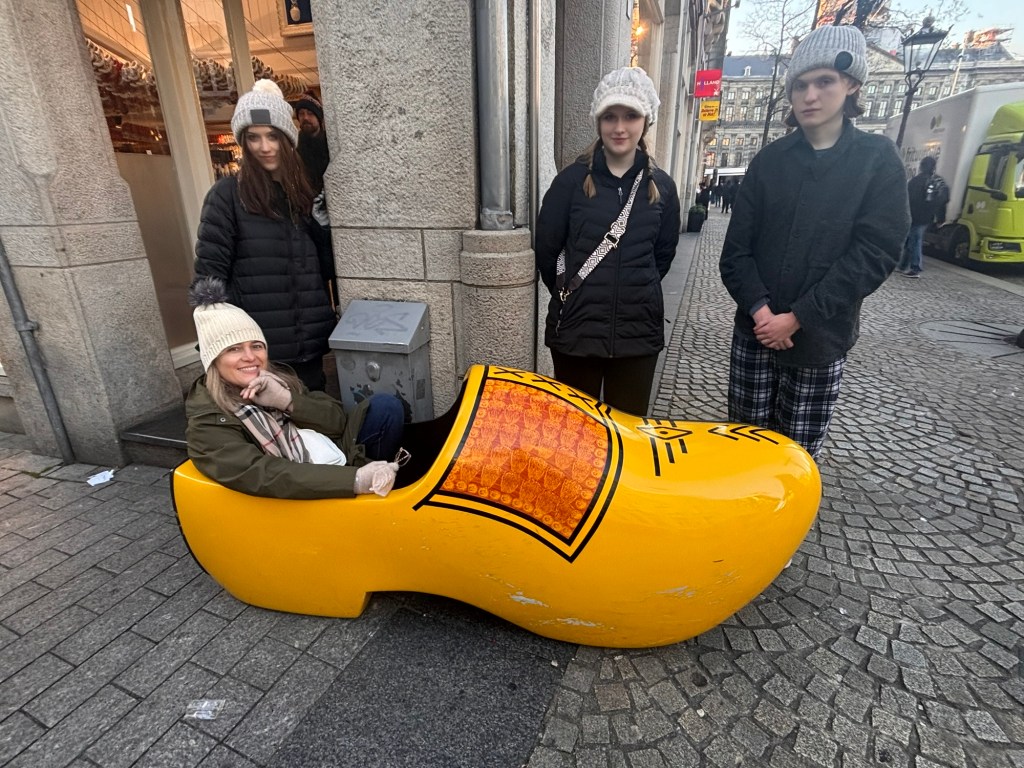
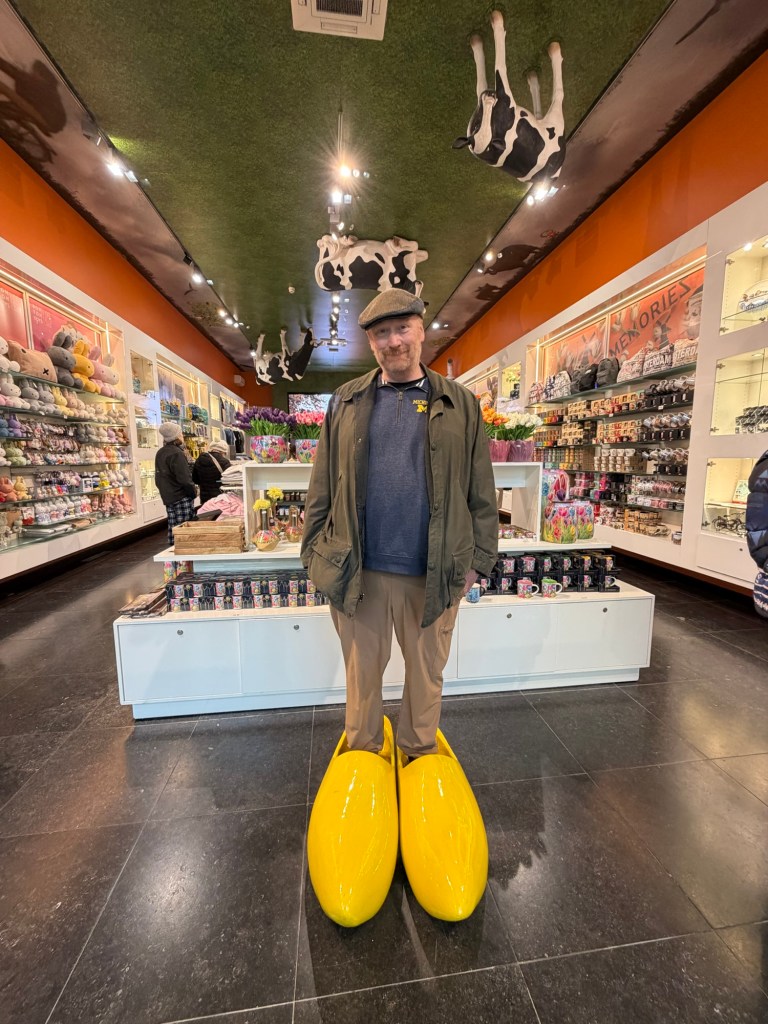
Now, I’m not saying all the tourist-stuff is bad per se. There’s a super fun giant yellow clog you can sit in for a cheesy pic just off Dam Square that I certainly posed with my kids in, demanding my husband take our photo. (Then I proceeded to make him pose with the oversized-clogs inside “100% Holland” store, where we did buy a wooden tulip and Delft ceramic ornament, among some other standards that you can buy almost anywhere in town).
The problem is the “too-much-ness” of things. Some central streets near the main town square next to Koninklijk Paleis Amsterdam (the Royal Palace) are carbon copies filled with generic plastic ephemera and cheap shirts. The same exact ones. Over and over and over in what seems like a never-ending cycle. This is not just a problem in Amsterdam, of course. All over Europe you’ll see this same tourist-fog from Paris to Portugal. And while there are stores like 100% Holland that are a little better with some less generic goods, you’ll still find many replicas.
And when it’s crowded in these tourist zones, the effect can be overwhelming. My 16-year-old son, in fact declared that he needed to “get out of here ASAP” because it was “killing my soul.” Sure, he was fresh off an eight-hour overnight plane ride and six hours of time zone difference and needed to eat. But still, he was right. It was too much. This is not what you come to Amsterdam for.
You came for the quaintness that makes this bustling metropolis seem like a small village. You want to marvel at the technology that the forward-thinking Dutch employed to turn their flooded flat land into a colorful, canal-lined city able to recover from one-time Spanish rule, Nazi invaders and bombings, and other historical horrors and still come out this side smelling like roses, er, tulips. (Actually, Amsterdam sadly smells like old weed smoke at seemingly every corner. But that’s a whole other story to tell later.)
The point is Amsterdam is a really cool place, which is why so many other tourists just like us, just like you want to come here. And they’re trying to get a handle on this too-much-ness over-tourism has caused, from banning new hotels to cutting down on the number of canal cruises allowed to “Stay Away campaigns,” with locals suing their own city for failing to control mass tourism. (Read about the measures the city’s taking here.) I see their point. The trash was out of control too. I was actually shocked, in fact at how much trash there was overflowing from too small, too-infrequently-picked-up trash cans, piles upon piles of garbage bags, many with holes from birds or people living on the streets. It’s sometimes hard to not get those in your otherwise gorgeous photos. I mean, we’d just gone to Lisbon in June, which also is suffering from over-tourism and they had zero of these trash issues. So I was genuinely taken aback by all the garbage.
The problem is… Amsterdam is worth going to, from remembering Ann Frank and the horrors of the Holocaust (which needs extra thinking about these days) to a museum dedicated to one of the world’s greatest artists in the Van Gogh Museum (one of the best museums I’ve ever been too, and I’ve been to A LOT! –more on that later) and all the other things that you’ve already seen on socials or read about in other guidebooks. It’s gorgeous, fun, and filled with variety from old and new, what made the city and the country what they were, in addition to what make them what they are now and will become.
You can help with the over-tourism issues pretty easily. And not by not going. Go when it is less busy, like we did – a mid-December week… or even better on a random February, if your work schedule allows. I’ve had some of my favorite trips places during random Februarys in years gone by. It’s cheaper and far less crowded. Win-win! And when you get there, don’t be lame. Go to the smaller stores. Don’t go somewhere just for a quick pic and move on. Stay a minute. Learn something. Don’t stand in the long lines to try the Insta-famous snacks. Look for out of the way things locals love. And do your best not to stand out when you get there. Be respectful, learn some of the language (even if everyone does speak really good English there), read books about their history (I rec several by Ben Coates), throw trash in not over-flowing cans, try spots not from social buzz. There’s so many cool things influencers haven’t popped into your feed with yet! Speaking of, check out this guide for my favorite street in Amsterdam with six places you likely won’t find in other guides!




 Travel Muse Magazine
Leave a comment